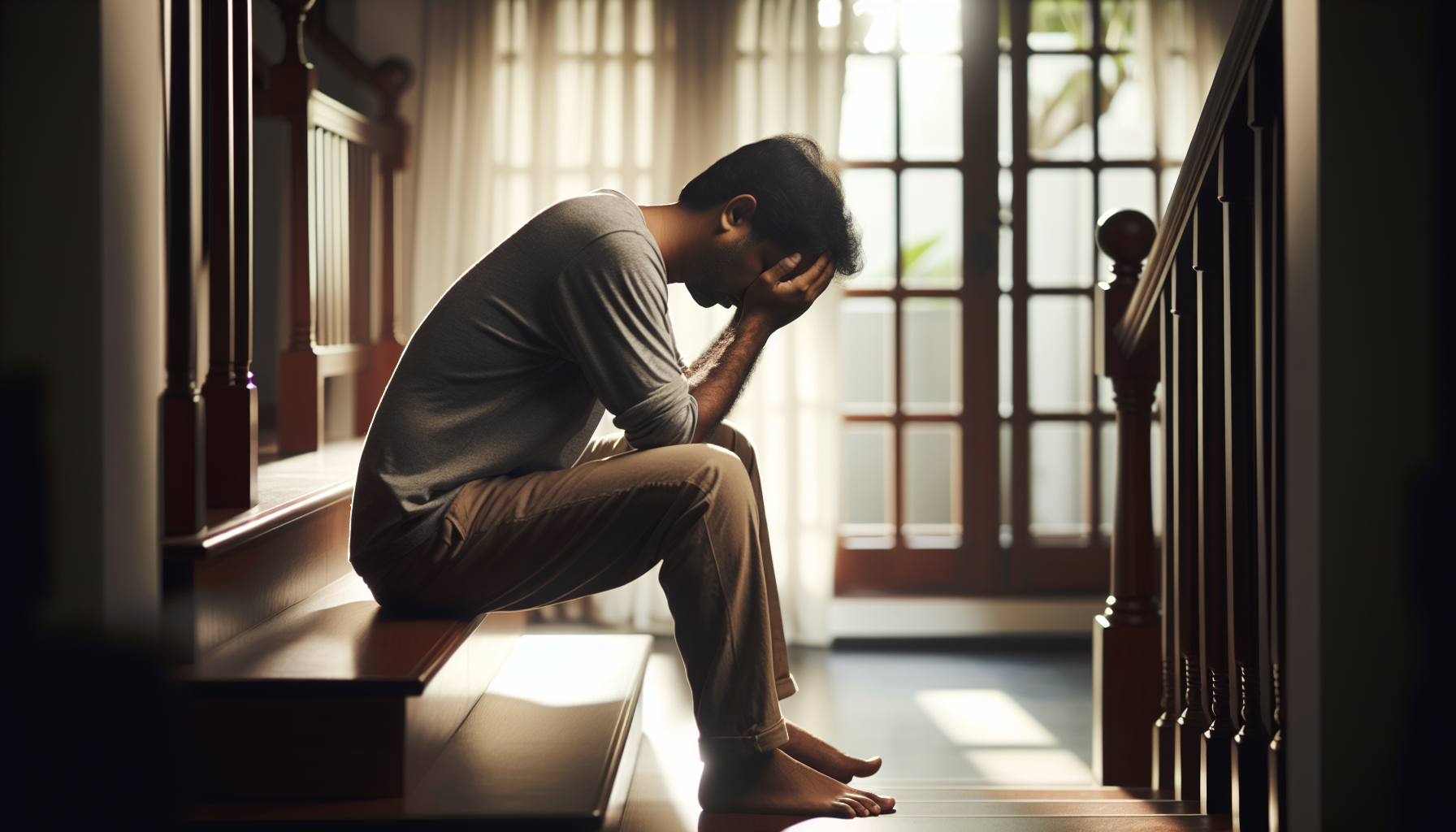
You are not lazy. You are not ungrateful. You are not failing at fatherhood. But something is very wrong, and you cannot quite name it. The exhaustion has gone past tiredness into something heavier. You snap at small things. You feel oddly distant from the people you love most. You sit in the car in the driveway for a few extra minutes before going inside, and you are not sure why.
That is not weakness. That is dad burnout, and it is more common than anyone talks about.
Dads are expected to just get on with it. Show up, earn, support, be present, never crack. There is precious little cultural space for a father to say "I am running on empty and I do not know how to refill." So most dads do not say it. They push through until pushing through stops working.
This article is for that moment. The moment you are wondering if something is actually wrong with you. Here is the short answer: something is wrong, it is fixable, and you are allowed to acknowledge it.
What Dad Burnout Actually Is
Burnout is not just being tired. Every new parent is tired. Burnout is what happens when chronic, unrelenting stress outpaces your ability to recover from it. It is a state of physical, emotional, and mental depletion that builds over time, usually invisibly, until the body and mind start refusing to cooperate.
The concept was originally studied in the context of caregiving professions: nurses, doctors, social workers. But research in the last decade has confirmed that parental burnout is a distinct phenomenon, and that fathers experience it too. A 2020 study published in Clinical Psychological Science found that parental burnout affects around 5% of parents in Western countries, with rates higher in contexts of high performance pressure and low social support.
Both of those conditions describe modern fatherhood pretty accurately.
The key difference between burnout and ordinary tiredness: tiredness goes away with sleep and rest. Burnout does not. You can sleep eight hours and still feel hollow. That is the tell.
Worth noting: sleep deprivation on its own is brutal and creates its own problems. But burnout is sleep deprivation's darker cousin. It sits underneath the tiredness and keeps you depleted even when you finally do get some rest.
The Signs of Dad Burnout
These are the specific things to look for. Not all of them will apply, but if three or more resonate, take that seriously.
1. Irritability that is out of proportion
The dishes in the wrong place. The baby crying at the exact wrong moment. A small comment from your partner that lands like a grenade. If you are finding yourself angry far beyond what the situation warrants, and then feeling ashamed about it, that is a red flag.
Burnout depletes the emotional regulation resources in your prefrontal cortex. Literally. Your brain has less capacity to manage frustration when it is chronically depleted. This is not a character problem. It is a resource problem. Your system is running on fumes, and fumes do not support patience.
If you are noticing anger specifically, the anger after becoming a dad article goes deeper into why fatherhood triggers it and what to do about it. But if the anger is part of a wider pattern of depletion, burnout is likely the root cause.
2. Emotional numbness
This one is sneaky because it does not feel like a crisis. It just feels like nothing. You look at your baby and you know you love them, but you cannot feel it right now. Your partner is talking and the words are going in but not landing. You go through the motions of the day without any emotional colour.
This emotional blunting is one of the most common and least discussed symptoms of burnout. It is the nervous system protecting itself by turning the volume down across the board. Think of it like an overloaded circuit breaker tripping. The system shuts down the non-essential channels to protect the core. Unfortunately, the channels it shuts down first are the ones that make life feel meaningful: connection, joy, tenderness, curiosity.
The numbness is not you becoming a bad person or a cold father. It is your brain in survival mode.
3. Resentment
Resentment toward your partner for seemingly having it easier. Resentment toward the baby for needing so much. Resentment toward friends without kids who are just living their lives. Resentment toward your former self who had time and freedom and did not appreciate either.
Resentment is a sign that something important is not being met. Usually rest, recognition, or support. It is information, not a character flaw. But if you ignore it, it festers. It leaks into conversations as passive aggression. It builds a wall between you and your partner that neither of you fully understands. If this is showing up in your relationship, the article on relationship problems after baby is worth reading alongside this one.
The important thing to understand: resentment does not mean you are ungrateful. It means the equation is out of balance. Acknowledging it is the first step toward rebalancing it.
4. Physical exhaustion that sleep does not fix
You wake up tired. You are tired at midday. You are tired in the evening. It feels like the tiredness is coming from somewhere deeper than hours of sleep. That is because it is.
Burnout involves physiological changes: elevated cortisol, disrupted HPA axis function, reduced immune response. Your body is running on stress hormones because the recovery periods never come. You might notice you are getting ill more often, that minor injuries take longer to heal, that your appetite is erratic, or that you have unexplained aches. These are not separate problems. They are the physical expression of a system running in emergency mode for too long.
Sleep helps, but it is not enough on its own. The body needs more than sleep to recover from chronic stress. It needs actual safety signals: time without demands, periods where nothing is expected of you, moments where the nervous system can stand down.
5. Loss of identity
Before you became a dad, you were someone. You had hobbies, interests, a social life, opinions about things that were not nappy brands or sleep schedules. Burnout often coincides with a wholesale disappearance of that person. You cannot remember what you used to enjoy. When someone asks what you are into, you draw a blank.
That hollowing out of self is both a symptom and a driver of burnout. When your entire identity becomes "dad" and "employee," there is nothing to draw from when those roles become exhausting. No internal resource to fall back on. No part of yourself that exists independently of the demands on you. We cover this in more depth in the article on identity crisis after becoming a dad, but it is worth naming here too, because identity loss and burnout feed each other in a loop that is hard to break without deliberately rebuilding some sense of self outside of your roles.
6. Dreading going home
The office becomes a refuge. Traffic is almost a relief. Any reason to not walk through the front door feels like a reasonable excuse. If the place that is supposed to be home now feels like the most demanding environment in your life, something has broken down in the system.
This sign is particularly painful because it comes with a heavy dose of guilt. You love your family. You chose this life. And yet the prospect of walking through that door fills you with something closer to dread than anticipation. That contradiction is not hypocrisy. It is what burnout does. It turns the thing you care about most into the thing that costs the most, and when you are already empty, you instinctively avoid further cost.
7. Withdrawal and disconnection
Cancelling on friends. Not replying to messages. Turning down social invitations. Retreating into screens or alcohol or any form of numbing. This is the burnout spiral in action: you feel depleted, so you withdraw from the things that might actually help restore you, which depletes you further.
Watch for the rationalisation here. "I am just an introvert." "I do not have the energy." "Nobody really wants to see me anyway." These sound like explanations. They are actually symptoms. The withdrawal feels protective, but it cuts you off from exactly the connections that could help.
Burnout vs. Postnatal Depression: Important Distinctions
These can overlap, but they are not the same thing, and the distinction matters for what to do next.
Burnout is primarily stress-driven and situational. It is caused by chronic overload without recovery. The primary emotional experience is exhaustion and depletion. With burnout, there are usually still moments of enjoyment, still moments of connection, still capacity for pleasure. They are just fewer and harder to access. Remove the stressor or restore the recovery, and the person tends to improve.
Paternal postnatal depression involves a more persistent and pervasive low mood. Clinical PND includes symptoms like persistent sadness, loss of interest in things you used to enjoy, changes in appetite or sleep beyond what the baby is causing, feelings of worthlessness, and in more serious cases, thoughts of self-harm. PND is a clinical condition that requires professional support. It does not reliably improve just by removing stressors.
Here is the complication: untreated burnout can develop into depression. They exist on a continuum, not as separate boxes. The chronic depletion of burnout gradually erodes the neurochemical foundations that keep mood stable. This is why catching burnout early matters. It is easier to treat the precursor than the condition it leads to.
If you are unsure which applies to you, the honest answer is: it might be both. Or it might be one presenting as the other. The right move is to see a GP. Say the words "I think I might be struggling with my mental health" and go from there. You can also explore the new dad anxiety article if anxiety is more the presenting issue.
What matters most: do not try to self-diagnose your way out of something that needs professional attention. The earlier you catch it, the easier it is to address.
Want the complete guide?
Everything from pregnancy to age two. Evidence-based, dad-tested, no fluff.
Get The New Dad PlaybookYou Are Allowed to Struggle
This needs saying plainly because most dads have never once heard it directed at them.
You are allowed to find this hard. You are allowed to be struggling. You are allowed to admit that the relentlessness of it is getting to you. Acknowledging that you are at your limit is not complaining and it is not weakness. It is accurate reporting of what is actually happening, and it is the first step toward doing something about it.
The pressure on modern dads is genuinely contradictory. Be present and involved. Earn enough to support the family. Do not show weakness. Be emotionally available. Never ask for help. Be a great partner. Manage your own mental health without making it anyone else's problem. These demands conflict with each other constantly, and they leave no room for the ordinary human experience of being depleted.
There is a specific kind of loneliness that comes with dad burnout. Your partner is probably exhausted too, so you feel you cannot add to their load. Your mates do not tend to ask how you are really doing. Your parents might dismiss it ("we managed, what is different now?"). Work does not care. So you carry it alone, because that is what you have always been told men are supposed to do.
That model is broken. Carrying it alone is not strength. It is a strategy that eventually collapses. Asking for help is not a failure. It is what competent adults do when a situation exceeds their solo capacity. And new parenthood absolutely, categorically exceeds solo capacity.
How to Recover from Dad Burnout
Recovery is not a weekend off. It is not a one-off conversation. It is a recalibration of your system over several weeks, and it requires doing several things at once. Here is what actually helps.
Get real rest, not just sleep
Sleep matters, but rest is broader than sleep. Rest means doing nothing productive and feeling okay about it. It means sitting in a chair without your phone. It means a walk alone without a podcast. It means activities that restore your nervous system rather than just filling time.
The research on burnout recovery consistently identifies unstructured recovery time as essential. Not Netflix. Not scrolling. Actual stillness or low-stimulation activity. Here is what that looks like in practice:
- A 30-minute walk alone, no headphones, no destination
- Sitting in a park with a coffee and not doing anything else
- Lying on the floor and staring at the ceiling (seriously, your nervous system needs zero-input time)
- Any physical activity done purely for enjoyment, not fitness goals
- Time in nature without a plan
This sounds obvious. It is also nearly impossible with a newborn unless it is deliberately scheduled. Which brings us to the next point.
Talk to your partner, specifically and honestly
Not "I am tired" but "I think I am burning out and here is what I am noticing." Be specific about what is happening. Be specific about what you need. "I need two hours on Saturday morning to myself, completely off-duty" is a request your partner can work with. "I just need a break" is too vague to act on and lands as a complaint rather than a problem to solve together.
Frame it as a team problem, not a blame exercise. You are not saying "you are not doing enough." You are saying "the system we are running is not sustainable, and I am the part that is breaking first." That distinction matters. It opens a conversation rather than starting an argument.
This conversation is hard. It can feel like you are adding to their load. But the alternative, continuing to burn out silently until you disconnect or explode, is much harder on everyone. Your partner almost certainly does not know the extent of what you are carrying, because you have been carrying it silently. Tell them.
Set limits on what you take on
Burnout is partly a supply problem: not enough rest, not enough support. But it is also a demand problem: too much being asked of you, by others and by yourself.
Look honestly at where the demands are coming from. Work overtime that is not actually required. Social obligations that feel compulsory but are not. Standards for yourself as a parent that are unrealistically high. The internal pressure to be performing well at everything simultaneously. Dad guilt often drives this, pushing you to overcompensate at home because you feel guilty about time at work, and overcompensate at work because you feel guilty about leaving the family. The result is performing at 110% in both directions, which is a fast track to depletion.
Some of these demands can be reduced. Not all of them, but some. Saying no to things feels selfish when you are already behind. It is actually strategic. A cup that is always empty is not useful to anyone.
Ask for help
From your partner. From family. From friends. From a GP. From a therapist. From a men's mental health organisation. Help is not a last resort. It is a maintenance requirement.
Practical help matters too: someone taking the baby for three hours so you can sleep without one ear open, a friend who will sit with you in a pub without requiring you to perform okayness, a parent who will do the school run for a week. These are not luxuries. They are recovery infrastructure.
Men's mental health resources worth knowing about:
- Mind (mind.org.uk): information, advice, local support groups
- CALM (thecalmzone.net): helpline 5pm-midnight, webchat available
- Samaritans (samaritans.org, 116 123): 24/7 crisis support, free to call
- SADAG (sadag.org): South Africa's depression and anxiety group, 0800 567 567
- Beyond Blue (beyondblue.org.au): Australian dads' mental health support, 1300 22 4636
These are real services with real people. They have heard it all before. You will not be wasting their time.
Reconnect with who you were before
Identity loss is a significant driver of burnout in fathers. When fatherhood consumes the entire self, there is nothing left to draw from. You need to remember you are a person, not just a role.
This does not require grand gestures. It can be thirty minutes doing something you actually enjoy, for no reason other than you enjoy it. Exercise, music, reading, cooking, whatever it is. Not for the baby. Not for your partner. For you.
It will feel indulgent. Do it anyway. The research on parental burnout recovery consistently finds that individual identity maintenance, keeping some part of yourself that belongs only to you, is one of the strongest protective factors against burnout. It is not selfish. It is structural. You are maintaining the foundation that everything else depends on.
Consider professional support
If you have been feeling this way for more than two weeks, if nothing you try is making a dent, or if you are having any thoughts of harming yourself, see a GP. Say the words out loud. Burnout that has tipped into depression needs more than lifestyle adjustments.
Cognitive Behavioural Therapy (CBT) and Acceptance and Commitment Therapy (ACT) both have strong evidence bases for burnout and related conditions. Many GPs can refer you, and many therapists offer sliding scale fees. The wait is worth it.
One practical note: if the idea of finding a therapist feels like another overwhelming task on an already-too-long list, ask your GP to handle the referral. That is literally what they are there for. You do not need to research therapists and compare options when you are already depleted. Just get in front of the GP and let them direct the next step.
How Long Does Recovery Take?
Longer than you want it to. Burnout that took months to build takes weeks to months to recover from. You will have better days and worse days. The trend matters more than any single day.
Some rough timelines based on the research:
- Mild burnout (caught early, a few symptoms): 2 to 4 weeks with active recovery measures
- Moderate burnout (multiple symptoms, been going on a while): 1 to 3 months
- Severe burnout (approaching or overlapping with depression): 3 to 6 months, often requiring professional support
The clearest sign you are recovering: you start having moments of genuine enjoyment again. Not performed enjoyment, not relief, but actual pleasure in something. A laugh that is not forced. A moment with your child where you are actually present, not just physically there. That is the signal that your system is coming back online.
"The willingness to sit with the reality of your own struggle, rather than push past it, is not weakness. It is the thing that actually leads out the other side."
Recovery also requires you to change something structural, not just manage the symptoms. If you recover and then return to the exact same conditions that caused the burnout, you will burn out again. Something has to change: how you communicate, what you take on, how you spend your limited free time, or how honest you are about your limits. If you went back to work recently and the transition is part of what pushed you over the edge, the article on returning to work after paternity leave has practical strategies for managing that specific pressure point.
The Bottom Line
Dad burnout is real. It is not just tiredness. It is not weakness. It is what happens when the demands on you consistently exceed your capacity to recover, for long enough that the system starts to break down.
The signs, irritability, emotional numbness, resentment, physical exhaustion, loss of identity, dreading home, are your body and mind telling you something important. Listen to them. Acknowledge them to someone else. And then take the steps to actually address them rather than pushing through until the wall becomes a collapse.
You became a dad because you wanted to show up for your family. The most important thing you can do for them right now might be admitting you need to show up for yourself first.