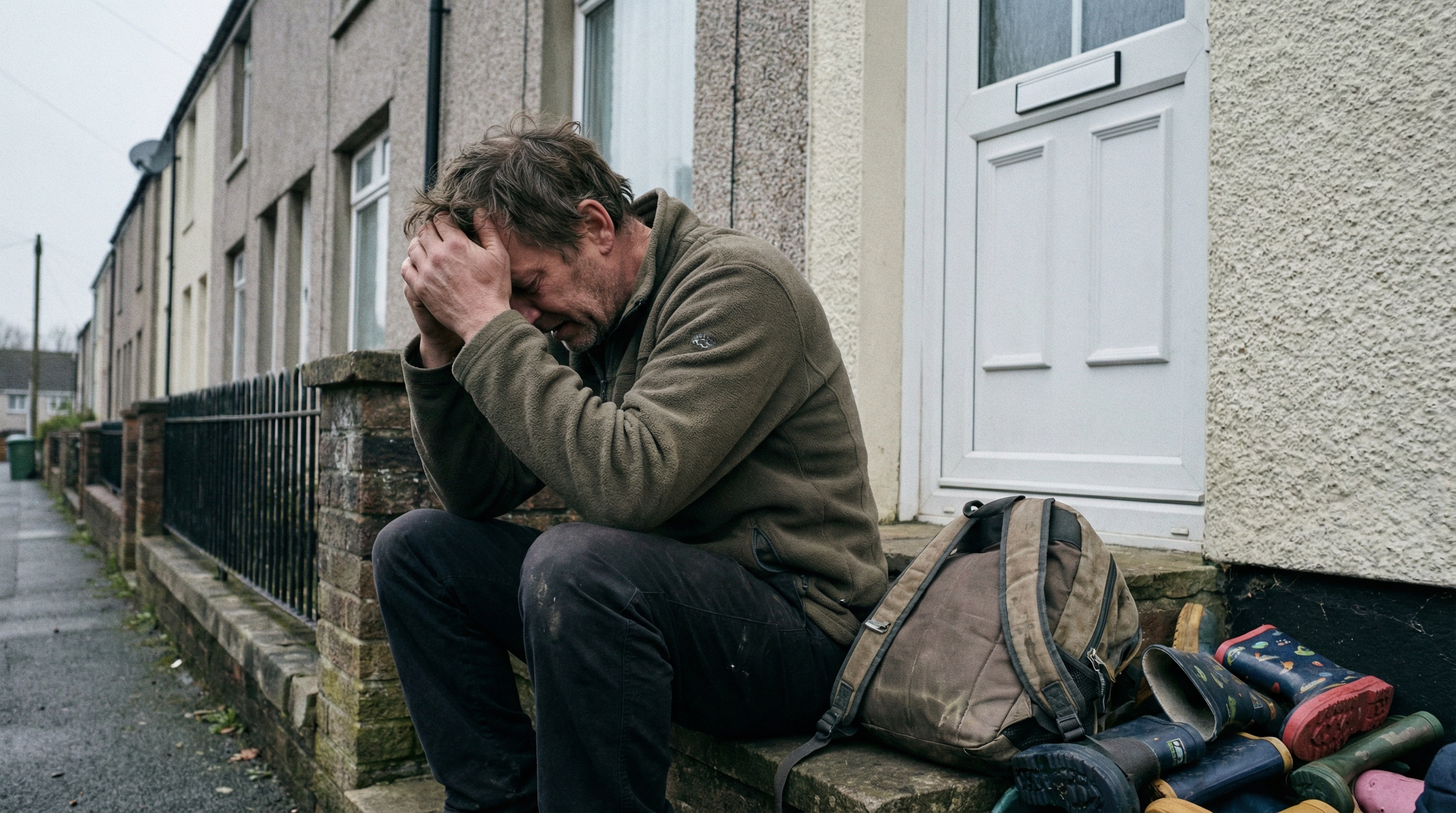


Nobody warns you about the anger.
They warn you about the tiredness. They warn you about the nappies. They even warn you - with a knowing smile - that your social life will take a hit. But nobody sits you down and says: "Mate, there might be days when you feel a rage so sudden and so intense that it scares you."
And yet here you are. Maybe it's 2am and the baby won't stop crying and you've tried everything and you feel something rising in your chest that you don't recognise. Maybe it's a Saturday afternoon and your partner asks you to do something perfectly reasonable and you snap - properly snap - and then spend the next hour hating yourself for it. Maybe it's in the car, or at work, or in the shower, and it just... arrives. This white-hot fury that seems to come from nowhere and everywhere at once.
If this is you, let's be clear about something right now: you are not a bad dad. You are not a bad person. And you are very, very far from alone.
The Embarrassing Truth
Anger is one of the most common - and least discussed - emotional experiences of new fatherhood. While we've made genuine progress in talking about postnatal depression in men, anger remains something most dads won't admit to. It feels too dangerous, too shameful, too close to a line that no decent person should approach. (For a full picture, our guide to paternal postnatal depression symptoms explains how anger connects to PND in men.)
But the numbers tell a different story. A 2018 study in the Journal of Family Psychology found that irritability and anger were among the most frequently reported symptoms in fathers experiencing postnatal distress. Not sadness. Not crying. Anger.
In Australia, the Perinatal Anxiety & Depression Australia (PANDA) organisation reports that anger and irritability are the primary way that paternal postnatal depression manifests - more common than low mood in men.
This isn't a character flaw. It's a pattern. And understanding it is the first step to managing it.
Sleep Deprivation and Emotional Dysregulation
Let's start with the most obvious factor: you're not sleeping.
And not sleeping doesn't just make you tired. It fundamentally changes how your brain processes emotion. Research from the University of California, Berkeley, using brain imaging studies, has shown that sleep deprivation amplifies activity in the amygdala - the brain's threat-detection centre - by up to 60%, while simultaneously reducing activity in the prefrontal cortex, which is responsible for impulse control and rational thought.
In plain English: when you're sleep-deprived, your brain is primed to overreact to perceived threats and stripped of its ability to put the brakes on. It's like driving a car with a hypersensitive accelerator and dodgy brakes.
Now layer on top of that the fact that your "perceived threats" include a screaming baby, a stressed partner, financial pressure, work deadlines, and the existential weight of being responsible for a tiny human who depends on you for literally everything.
No wonder you're angry. Your brain is doing exactly what a sleep-deprived, stressed brain does. The question isn't why you feel this way - it's what you do about it.
The Misdirected Anger Trap
Here's where it gets complicated. Anger needs a target. And in the fog of exhaustion and overwhelm, it tends to find the nearest one - which is usually your partner, yourself, or (and this is the thought that terrifies most dads) your baby.
Anger at Your Partner
This is probably the most common. Your partner asks you to change a nappy and you react as though they've asked you to solve world hunger. Or they make a comment about how you loaded the dishwasher and you feel genuine fury rising.
What's actually happening: the anger usually isn't about the nappy or the dishwasher. It's displaced frustration - about the loss of your old life, about feeling unappreciated, about exhaustion, about a hundred things you haven't had time to process. Your partner just happens to be there. If relationship tension is building, our guide to relationship problems after a baby addresses this directly.
Anger at Yourself
Many dads turn the anger inward. You're furious at yourself for not coping better, for not being the dad you imagined you'd be, for snapping at your partner, for feeling resentful about a baby you desperately wanted. This self-directed anger often manifests as harsh internal criticism: What's wrong with me? Why can't I handle this? Other dads manage fine.
Other dads are not managing fine. They're just not telling you.
Anger Towards the Baby
This is the one nobody wants to talk about. But it's vital that we do, because silence around this topic is dangerous.
Feeling a flash of anger or frustration when your baby won't stop crying is normal. It does not make you an abuser. It does not mean you'll hurt your child. It means you're a human being whose nervous system is overwhelmed.
What matters is what you do with that feeling. The universal advice from midwives, health visitors, and child psychologists is the same: if you feel overwhelmed, put the baby down somewhere safe (cot, Moses basket, playmat), leave the room, and take a few minutes to breathe. The baby will be fine. You need to regulate yourself first.
If these feelings are frequent or escalating, that's a signal to seek help - not a reason for shame.
Recognising Your Triggers
Anger doesn't actually come from nowhere. It has triggers - specific situations, sensations, or thoughts that activate it. Learning to identify yours is one of the most powerful things you can do.
Common anger triggers for new dads include:
- The crying that won't stop. Particularly when you've exhausted every soothing technique you know.
- Feeling incompetent. When you can't get the baby to sleep, can't figure out the car seat, can't do what your partner seems to do effortlessly.
- Feeling invisible. When the entire world's attention (including your partner's) is focused on the baby and nobody asks how you're doing.
- Physical discomfort. Hunger, thirst, back pain from carrying the baby, headaches from exhaustion - all lower your threshold.
- The "mental load" imbalance. When you feel like you're doing loads but nobody notices, or when household tasks pile up and it feels like everything falls on you.
- Noise sensitivity. Sleep deprivation makes you hypersensitive to sound. A crying baby can feel physically painful.
Start paying attention. When the anger hits, try to pause - even for two seconds - and ask: What's the actual trigger here? You might be surprised. It's rarely the thing you think it is.
Want the complete guide?
Everything from pregnancy to age two. Evidence-based, dad-tested, no fluff.
Get The New Dad Playbook - £29Normal Frustration vs. Something More Serious
There's an important distinction to make here, and it's one that can be hard to see when you're in the thick of it.
Normal new-dad frustration looks like:
- Occasional irritability when you're tired
- Snapping and then feeling bad about it
- Frustration that passes once you've slept or had a break
- Ability to calm yourself down relatively quickly
- The anger doesn't control your behaviour
Something that needs attention looks like:
- Anger that feels constant or is getting worse over time
- Explosive outbursts that feel disproportionate to the situation
- Difficulty calming down once the anger starts
- Withdrawal from your partner or baby to avoid triggering it
- Physical symptoms - clenched fists, racing heart, feeling like you might lose control
- Using alcohol or other substances to manage the feelings
- Thoughts of harming yourself, your partner, or your child
If you recognise yourself in the second list, please reach out for help. This isn't a moral judgement - it's a medical one. You deserve support, and it's available.
Paternal Anger and Its Link to PND
Here's something that many GPs still don't know: anger is a primary symptom of postnatal depression in men.
While female PND often presents with sadness, tearfulness, and withdrawal, male PND frequently looks different. The most common symptoms in fathers are:
- Irritability and anger
- Increased risk-taking behaviour
- Working excessively long hours (avoidance)
- Withdrawal from family
- Physical symptoms (headaches, stomach problems, muscle tension)
- Alcohol or substance misuse
A 2010 meta-analysis published in JAMA found that approximately 10% of fathers experience depression in the first year after their child's birth - and the real figure is likely higher, because men underreport.
If your anger is persistent, escalating, or accompanied by other symptoms on this list, it's worth considering whether postnatal depression might be part of the picture. This isn't weakness. It's a treatable condition, and recognising it is the bravest thing you can do.
Practical Anger Management for Exhausted Dads
Let's get into what actually helps - the stuff you can do tonight, tomorrow, and over the coming weeks.
1. The 90-Second Rule
Neuroanatomist Dr Jill Bolte Taylor's research shows that the chemical process of an emotion - including anger - lasts approximately 90 seconds in the body. After that, any remaining anger is being maintained by your thoughts.
When you feel it rising: stop, breathe, and ride out the 90 seconds. Don't act on it. Don't speak. Just notice it, and let the wave pass. This takes practice, but it works.
2. Leave the Room
This is not running away. This is strategic retreat. If you feel overwhelmed, say "I need a minute" and walk away. Go to another room. Step into the garden. Splash water on your face.
Leaving is not failure. Staying and saying something you'll regret is.
3. The Physical Reset
Anger is a physical state - your body is flooded with adrenaline and cortisol. Physical activity is the fastest way to metabolise those chemicals.
Can't go for a run at 3am? Do press-ups. Squeeze an ice cube. Hold a plank. Even tensing every muscle in your body for 10 seconds and then releasing can help discharge the physical tension.
4. Fix the Sleep (As Much as Possible)
If sleep deprivation is the root cause - and it often is - then improving sleep is your most powerful intervention. Talk to your partner about taking shifts for night feeds. Accept help from family. If your baby is over six months, look into gentle sleep training approaches.
Even one extra hour of unbroken sleep per night can make a meaningful difference to your emotional regulation.
5. Talk About It
This might be the hardest one for many men. But verbalising anger - to your partner, a mate, a therapist - reduces its intensity. Research consistently shows that naming an emotion diminishes its power over you.
You don't need to have a deep therapeutic conversation. Just saying "I've been feeling really angry lately and I don't fully understand why" can be enough to start.
6. Reduce Stimulation
When you're running on empty, everything feels louder, brighter, and more annoying. Give yourself permission to reduce input. Wear earplugs (you can still hear the baby; the edges just get softened). Turn down the lights. Put your phone on silent. Create pockets of quiet.
When to Get Help
If your anger is frequent, escalating, or scaring you, professional help isn't optional - it's essential. Here's where to start in the UK:
- Your GP: Book a double appointment and be honest. Say the word "anger." Many GPs will screen for postnatal depression if you flag it.
- PANDAS Foundation: The UK's leading perinatal mental health charity. They support dads. Helpline: 0808 196 1776. Email: help@pandasfoundation.org.uk
- Mind: Information, support, and a helpline for any mental health concern. Call: 0300 123 3393.
- NHS Talking Therapies (formerly IAPT): Free talking therapy. Self-refer without needing your GP. Search "NHS talking therapies" plus your area.
- Andy's Man Club: Free peer-support groups for men, every Monday evening across the UK. No referral, no waiting list. Just turn up.
- Samaritans: If you're in crisis or need to talk urgently. Call: 116 123 (free, 24/7).
- CALM (Campaign Against Living Miserably): Helpline and webchat for men. Call: 0800 58 58 58 (5pm–midnight).
You would take your baby to the doctor if they were unwell. Take yourself to the doctor when you're unwell. It's the same principle.
A Final Word
Anger after becoming a dad is not a sign that you're broken. It's a signal - from your body, from your brain, from your circumstances - that something needs attention. Maybe it's sleep. Maybe it's support. Maybe it's a conversation you've been avoiding. Maybe it's professional help.
Whatever it is, the anger is information, not identity. It's telling you something. Listen to it.
And if you're reading this in the dark hours, clenching your jaw, wondering if you're the only dad who feels like this - you're not. Not even close.
You're a good dad having a hard time. Those two things can exist together.
Frequently Asked Questions
Is it normal to feel angry after becoming a dad?
Yes. Irritability and anger are among the most commonly reported emotional experiences for new fathers. Sleep deprivation, hormonal changes, stress, and the enormous psychological adjustment of becoming a parent all contribute. Occasional frustration is completely normal - but persistent or escalating anger deserves attention and support.
Why am I so angry at my partner since the baby arrived?
Most anger directed at partners is displaced frustration - about exhaustion, loss of your old life, feeling unappreciated, or being overwhelmed. Your partner is the nearest available target, not the actual cause. Recognising this pattern is the first step. Communicating openly about how you're both feeling (without blame) can help enormously.
Can anger be a sign of postnatal depression in dads?
Absolutely. Research shows that anger and irritability are primary symptoms of paternal postnatal depression - more common than sadness in men. If your anger is persistent, getting worse, or accompanied by withdrawal, excessive work, risk-taking behaviour, or substance use, speak to your GP or contact the PANDAS Foundation (0808 196 1776).
What should I do if I feel angry towards my baby?
First: feeling a flash of frustration when a baby won't stop crying is normal and does not make you a bad parent. If you feel overwhelmed, put the baby down somewhere safe, leave the room, and take a few minutes to breathe and calm yourself. If these feelings are frequent or frightening, seek professional help - this is a sign you need support, not judgement.
How can I manage anger when I'm sleep-deprived?
Use the 90-second rule (pause and let the chemical wave of anger pass), leave the room when you feel overwhelmed, use physical resets (press-ups, cold water, tensing and releasing muscles), and prioritise improving your sleep however you can. Even small improvements in sleep quality significantly improve emotional regulation.
Where can dads get help with anger in the UK?
Several services specifically support fathers: the PANDAS Foundation (0808 196 1776), Andy's Man Club (free Monday evening groups), Mind (0300 123 3393), NHS Talking Therapies (self-referral), CALM helpline (0800 58 58 58), and the Samaritans (116 123). Your GP can also screen for postnatal depression and refer you for further support.