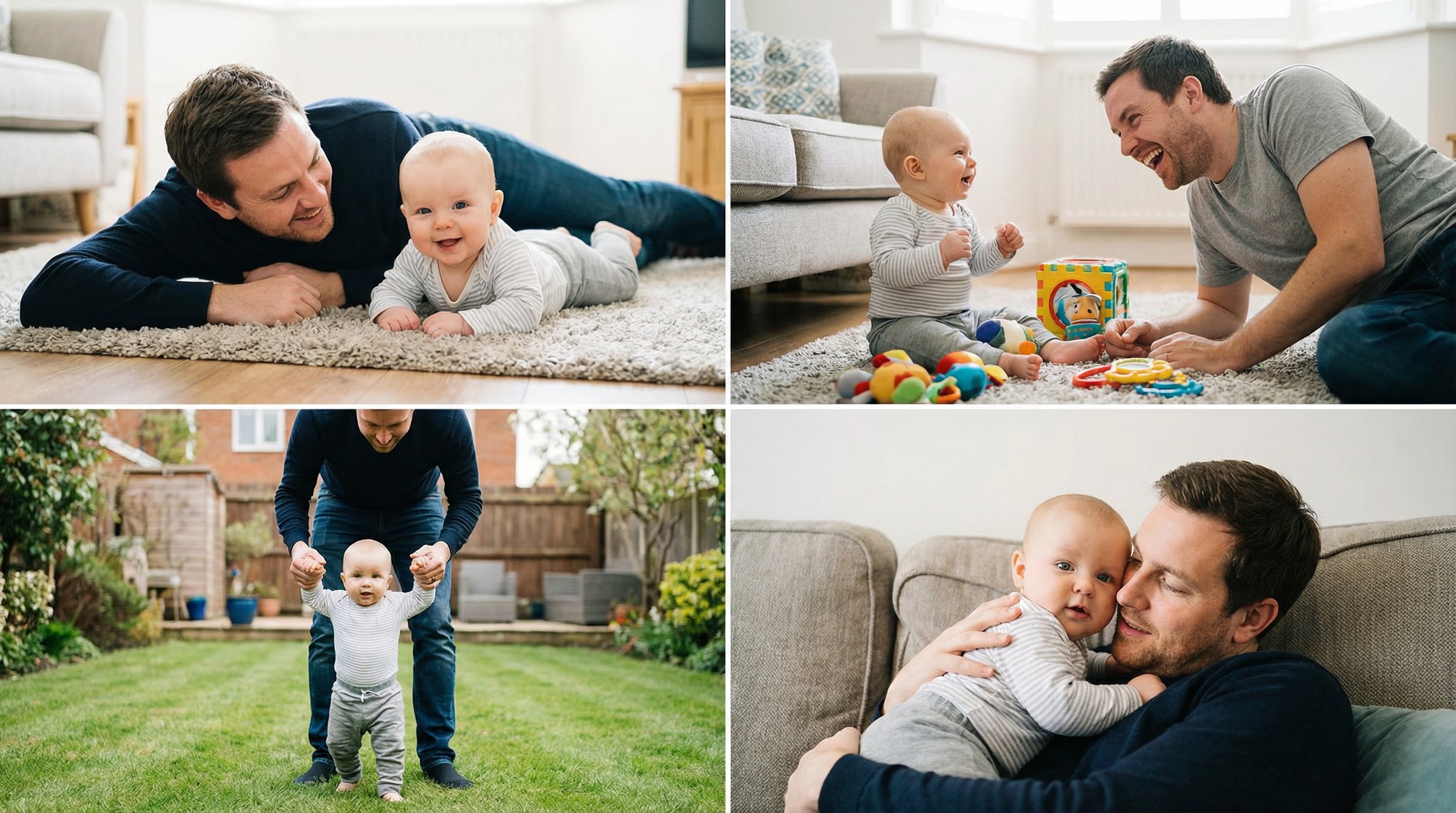


Let's start with the most important thing you'll read in this entire article: the range of "normal" is enormous. If you've been up at 3am Googling "when should my baby be rolling over" and spiralling because some chart says 4 months but your baby is nearly 5 months and still just lying there like a very small, angry starfish - breathe. You're fine. Your baby is almost certainly fine.
Milestone guides are supposed to be reassuring. Instead, they often become anxiety fuel - a checklist of things to panic about. This one is different. We'll walk through each month of the first year, tell you what's likely happening (not what must be happening), and - the bit most guides skip - give you specific things you as a dad can actually do to support your baby's development.
Because that's the thing. You're not just an observer here. You're not "helping mum." You are a parent, and your baby needs you in ways that are unique and irreplaceable.
The Official Checkpoints (NHS)
Before we go month by month, it's worth knowing that in the UK, your baby will have formal developmental checks at specific points. These are recorded in the Personal Child Health Record - better known as the red book, that burgundy booklet you got shortly after birth.
The key scheduled reviews are:
- 6–8 week check - physical examination by a GP, plus health visitor review
- 9–12 month review - developmental check by your health visitor
- 2–2.5 year review - another health visitor assessment
These are the moments a professional will formally assess your baby's development. Everything between those points? That's just life happening at its own pace. So let's see what that looks like.
Month 1: The Foggy Beginning
What's Happening
Your newborn can see about 20–30cm - roughly the distance from the crook of your arm to your face. Perfect design, that. They'll fix their gaze on faces (yours is their favourite), respond to loud sounds with a startle reflex, and move in jerky, uncoordinated ways. They sleep an extraordinary 16–18 hours a day, but never when you want them to.
Their world is small: eat, sleep, cry, be held. That's it. And that's enough.
What Dad Can Do
- Skin-to-skin contact. Unbutton your shirt, put baby on your bare chest. This isn't just nice - it regulates their heart rate, temperature, and breathing. It also floods both of you with oxytocin, which helps you bond.
- Talk to them. They can't understand words, but they're already learning the rhythm of your voice. Narrate what you're doing: "Right, we're changing your nappy now. This is the fun part."
- Learn their hunger cues. Rooting (turning their head and opening their mouth), sucking on fists, getting fidgety - these all come before crying. If you can spot them early, everyone's calmer. Check out our guide to holding a newborn if you're still feeling unsure about the physical side.
Month 2: The First Smile
What's Happening
Somewhere around 6–8 weeks, your baby will smile at you. Not a wind-induced grimace. A real, deliberate, I see you and I'm happy about it smile. This is one of the most significant early milestones, and it will absolutely destroy you in the best way.
They're also starting to track moving objects with their eyes, making cooing sounds ("ooh", "aah"), and having slightly longer periods of wakefulness.
What Dad Can Do
- Start tummy time. Place baby on their front on a firm surface for 2–3 minutes, several times a day. They'll hate it at first. That's normal. Get down on their level and make silly faces to encourage them to lift their head.
- Make exaggerated facial expressions. Wide eyes, big smiles, raised eyebrows. They're studying your face like it's the most fascinating thing in the universe - because to them, it is.
- Sing. It doesn't matter if you sound terrible. The rhythm, repetition, and the fact it's your voice is what matters.
Month 3: Head Up, World Opening
What's Happening
During tummy time, they're now lifting their head and chest with more confidence. They'll bat at objects dangled near them (not grab - that comes later), laugh out loud for the first time, and clearly recognise familiar faces. Their neck control is improving rapidly.
What Dad Can Do
- Dangle toys above them during tummy time. Let them swipe and miss - it's building hand-eye coordination.
- Read books aloud. They can't understand a word. That's not the point. The rhythm of language, the rise and fall of your voice, the closeness of sitting together - that's language development happening in real time.
- Own bath time. If you haven't already, make this your routine. Warm water, a calm voice, gentle washing. Many dads find bath time becomes their favourite part of the day.
Month 4: The Rolling Revolution
What's Happening
Many babies roll from front to back around now (back to front usually comes later). This is a safety milestone - from this point on, never leave your baby unattended on a changing table, sofa, or bed. They'll also start grabbing objects deliberately, discovering their own hands (endlessly fascinating to a 4-month-old), and you may hit the 4-month sleep regression. This is real, it's temporary, and it's a sign of brain development, not a problem.
What Dad Can Do
- Create supervised floor time. A play mat with an activity gym gives them things to reach for, kick at, and grab. Floor time is development time.
- Introduce sensory toys. Different textures, crinkly fabrics, soft rattles. Everything goes in the mouth from now on, so make sure it's safe.
- Survive the sleep regression together. Tag-team with your partner. Take shifts. Nobody is at their best on broken sleep - be kind to each other. Our newborn sleep guide covers the foundations.
Want the complete guide?
Everything from pregnancy to age two. Evidence-based, dad-tested, no fluff.
Get The New Dad Playbook - £29Month 5: Reaching Out
What's Happening
Your baby is reaching for objects with real purpose now and may start transferring things from one hand to the other. They might sit with support (propped on cushions or in your lap), and they're starting to respond to their own name - turning their head when they hear it.
What Dad Can Do
- Mirror play. Hold them in front of a mirror. They don't know it's them yet, but they're fascinated by the baby looking back. This supports social and cognitive development.
- Simple cause-and-effect toys. Rattles, squeeze toys, anything where "I do this → that happens." It's their first understanding of how the world works.
- Practice supported sitting. Sit them between your legs with your hands ready to catch. They're building core strength every time they wobble and correct.
Month 6: The Weaning Adventure Begins
What's Happening
The NHS recommends starting solid foods at around 6 months. Your baby can now sit with support (or briefly alone), and they're babbling consonant sounds - "ba", "da", "ma". They might reach for your food, which is a good sign they're ready.
This is also when many babies start showing a clear preference for familiar people and might be warier of strangers.
What Dad Can Do
- Research weaning together with your partner. Baby-led weaning, purées, or a combination - there's no single right answer. But being involved in this decision matters. You're not the assistant; you're the co-pilot.
- Introduce the high chair. Let them sit at the table with the family during meals, even before they're eating much. It's about inclusion.
- Read interactive books. Lift-the-flap, touchy-feely, peek-a-boo books. They can now participate, and they love it.
Dad tip: The first few weeks of weaning are messy, hilarious, and mostly about exploration - not nutrition. Milk is still the main event. Don't stress about how much they actually eat.
Month 7: Sitting Solo and Separation Wobbles
What's Happening
Most babies are sitting unsupported by now. Object permanence is kicking in - they're starting to understand that things (and people) still exist when they can't see them. This is wonderful for cognitive development but also means separation anxiety begins. They might cry when you leave the room.
What Dad Can Do
- Peek-a-boo. It's not just a game - it's teaching them that you go away and come back. That's a big deal for a brain learning about permanence.
- Hide toys under cloths and let them "find" them. Same principle: things don't disappear just because you can't see them.
- Encourage crawling. Place toys just out of reach during floor time. Some babies crawl on all fours, some commando crawl, some bum-shuffle. All normal.
Months 8–9: On the Move
What's Happening
Crawling is in full swing (or bottom-shuffling - both perfectly normal). They're pulling themselves to standing using furniture, developing the pincer grip (picking up small objects between thumb and forefinger), and might start saying "dada" or "mama." Fair warning: it's probably not meaningful yet. They're experimenting with sounds, not naming you. Sorry.
What Dad Can Do
- Baby-proof NOW. Not next weekend. Now. Socket covers, cupboard locks, stair gates, securing furniture to walls. Check our baby-proofing checklist by age for the full rundown.
- Create a safe crawling space. Clear an area of the living room. Let them explore freely without you hovering over every movement.
- Introduce a cup. An open cup or free-flow sippy cup with water at mealtimes. It's messy. It's necessary.
Months 10–11: Cruising Towards Independence
What's Happening
Your baby is "cruising" - walking sideways while holding onto furniture. They might stand alone for a few seconds, looking both triumphant and terrified. They're waving bye-bye, imitating sounds and actions (clapping, banging things together), and starting to understand simple words like "no" (understanding it and obeying it are very different things).
What Dad Can Do
- Push toys. Walkers they can push along give them confidence to take supported steps. Avoid the seated walkers that move on their own - they can be dangerous and may actually delay walking.
- Safe climbing opportunities. Soft play at home: sofa cushions on the floor, low steps. They want to climb everything. Better to give them safe options than to fight it.
- Simple instructions. "Can you give me the ball?" "Wave bye-bye!" They understand more than you think. Celebrate when they respond - that positive feedback loop is powerful.
Month 12: The First Birthday
What's Happening
Some babies take their first independent steps around their first birthday. Some don't - and that's completely normal. Walking anytime between 9 and 18 months is within the typical range. They're saying 1–3 recognisable words, pointing at things they want, drinking from a cup (messily), and understanding simple requests.
This is also when the 9–12 month health visitor review happens. Your health visitor will check developmental milestones, growth, and chat about feeding, sleep, and safety. Bring your red book.
What Dad Can Do
- Celebrate. The first birthday is a milestone for you, not for them. They won't remember the party. You will. Take it in.
- Let them walk toward you. Sit a few feet away, open your arms, and let them toddle over. Resist the urge to carry them everywhere - they need the practice.
- Keep talking. Narrate everything. Name objects. Ask questions, even though the answers will be gibberish. Every word they hear is building their language bank.
When to Have a Chat with Your GP or Health Visitor
This section isn't here to worry you. It's here because some things are worth getting checked, and early support - when needed - makes a real difference. Consider speaking to your GP or health visitor if your baby:
- Is not smiling by 3 months
- Is not responding to sounds by 4 months
- Cannot sit with support by 9 months
- Is not babbling by 12 months
- Is not walking by 18 months
These don't mean something is wrong. They mean it's worth a professional opinion. If you're ever unsure, NHS 111 is available 24/7, and your health visitor is there specifically for these questions. No one will think you're overreacting.
The Bigger Picture
Here's what no milestone chart tells you: the best thing you can do for your baby's development is be present. Not perfect - present. Talk to them, hold them, play with them, read to them. Get on the floor. Be silly. Let them grab your nose and laugh about it.
Milestones are signposts, not deadlines. Your baby isn't falling behind because they haven't ticked every box on some chart written by someone who's never met them. They're growing at their pace, in their way, and they've got you - which is the biggest advantage of all.
The New Dad Playbook
The complete guide from pregnancy to toddlerhood. Written by a dad, for dads. No jargon, no judgement.
Get The New Dad Playbook - £29Frequently Asked Questions
What are normal baby milestones at 6 months?
At 6 months, most babies can sit with some support, babble consonant sounds like "ba" and "da," reach for and grab objects, respond to their own name, and may be ready to start solid foods. They typically show interest in their surroundings, recognise familiar faces, and might start showing stranger awareness. Remember, these are averages - your baby might be ahead in some areas and still catching up in others.
When do babies start walking?
Most babies take their first independent steps between 9 and 18 months, with the average being around 12–14 months. Some babies skip crawling entirely and go straight to walking, while others are happy cruising along furniture for weeks before letting go. If your baby isn't walking by 18 months, it's worth mentioning to your health visitor, but many perfectly healthy children walk later than their peers.
When should I be worried about baby milestones?
Try to think of it less as "worried" and more as "worth checking." Speak to your GP or health visitor if your baby isn't smiling by 3 months, not responding to sounds by 4 months, unable to sit with support by 9 months, not babbling by 12 months, or not walking by 18 months. The NHS developmental checks at 6–8 weeks, 9–12 months, and 2–2.5 years are specifically designed to catch anything that needs attention. Trust those, and trust your instincts.
What is the NHS red book?
The Personal Child Health Record (PCHR), commonly called the red book, is a health record given to every child born in England. It's a burgundy-coloured booklet that tracks your baby's growth, vaccinations, developmental checks, and health visitor reviews from birth through to age 5. Bring it to every GP appointment, health visitor check, and A&E visit. It's one of the most important documents you'll own as a parent - keep it safe and keep it updated.
How can dads support baby development?
Dads support development in countless ways: skin-to-skin contact in the early weeks, talking and reading aloud (which builds language foundations from day one), supervising tummy time, playing on the floor, introducing sensory experiences, and being actively involved in routines like bath time and feeding. Research consistently shows that babies who have engaged, present fathers show stronger cognitive and social development. You don't need special skills or expensive toys - you just need to show up and interact.
This article is part of The New Dad Playbook's baby development series. For more evidence-based guides written specifically for dads, explore our sleep guides, safety checklists, and newborn handling guide.