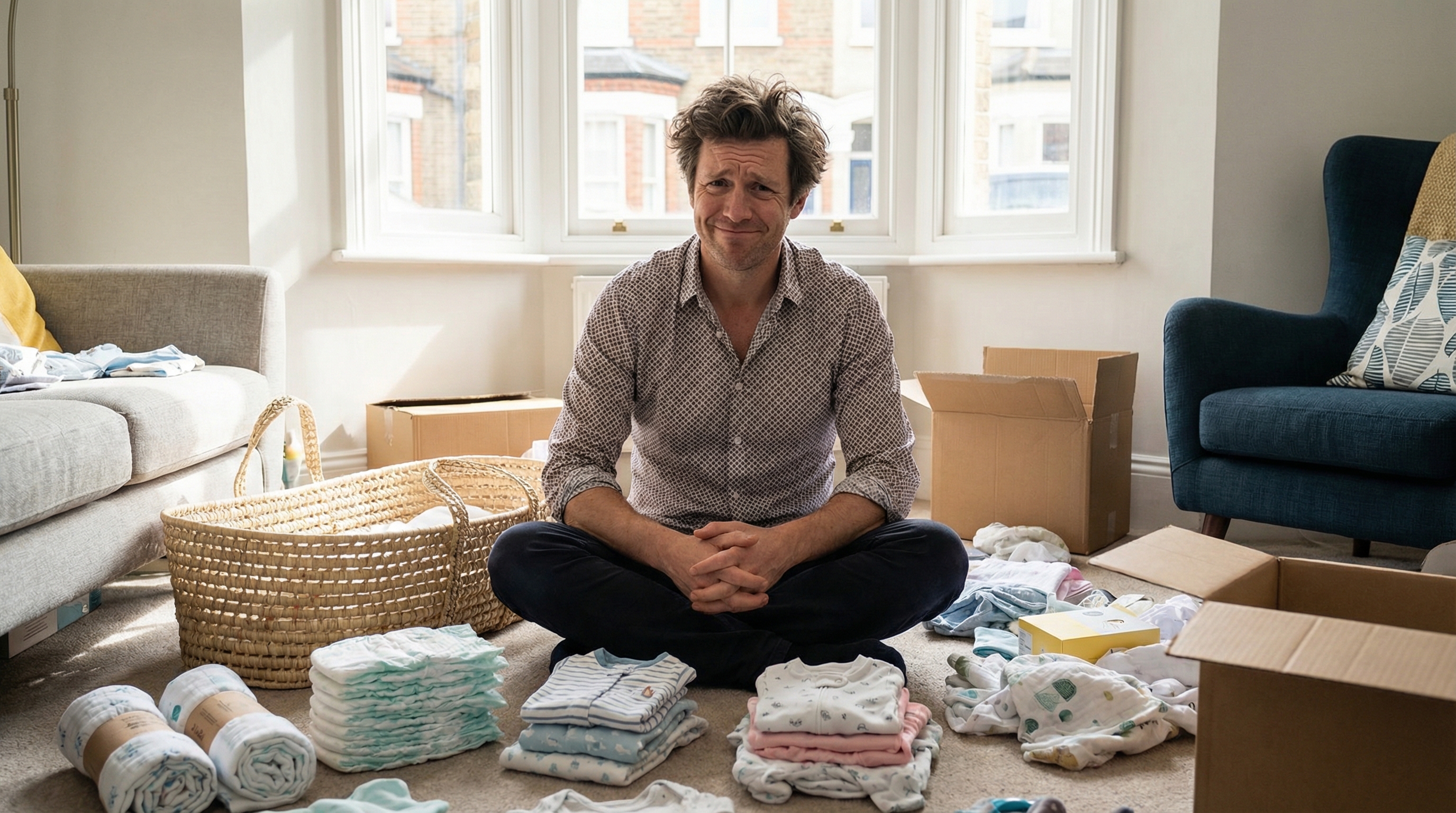


Somewhere around the 20-week scan, a switch flips. Suddenly you're looking at prams that cost more than your first car, reading reviews of nappy bins at midnight, and wondering whether your baby genuinely needs a £300 "next-generation sleep system" or whether that's just very effective marketing.
Here's the uncomfortable truth the baby industry doesn't want you to hear: most of what they sell you, you don't need. Not "nice to have but not essential." Genuinely don't need. Your grandparents raised your parents with a fraction of this stuff, and somehow civilisation continued.
This guide is the honest version. Written by a dad, for dads (and mums, and anyone buying for a newborn). No affiliate links. No sponsored products. Just a straightforward breakdown of what you actually need, what's nice to have, and what's a complete waste of money - with realistic UK prices so you can actually budget.
The Genuine Essentials
These are the things you literally cannot bring a baby home without. Everything else is optional.
Nappies
Your newborn will go through 10–12 nappies a day. That's not a typo. If you haven't yet, read our guide on how to change a nappy so you're ready from day one. For the first month, you'll need size 1 (some hospitals provide the first few). Don't stockpile one size - babies grow fast and unpredictably.
Budget option: Aldi Mamia or Lidl Lupilu nappies are consistently rated as highly as Pampers in consumer tests. Around £2.50 for a pack of 24.
Realistic first-month cost: £30–40 for disposables.
If you're considering reusable nappies, they're brilliant long-term but require an upfront investment of £200–400 for a full set. Most council websites offer cloth nappy incentive schemes - check yours before buying.
Sleepsuits and Bodysuits
Newborns live in sleepsuits. That's it. They don't need jeans. They don't need shoes. They don't need that adorable outfit your aunt bought that has seventeen buttons and takes longer to put on than it stays clean.
You need:
- 6–8 sleepsuits (the ones with built-in feet and a zip - not poppers. Trust me on the zip.)
- 6–8 short-sleeve bodysuits (vests that go underneath)
- 2 cardigans or zip-up hoodies for layering
- A hat for the first few days (newborns lose heat through their heads)
- Scratch mittens (though many sleepsuits have fold-over cuffs that do the same job)
Buy mostly in "newborn" size and a few in "0–3 months." Some babies skip newborn size entirely if they arrive on the larger side.
Realistic cost: £30–50 from supermarkets or Primark. Don't buy designer baby clothes. They'll be covered in sick within the hour.
A Safe Place to Sleep
Your baby needs somewhere safe to sleep that meets current UK safety standards. The options:
- Moses basket: Portable, cheap (£30–60), but they outgrow it by 3–4 months. Good for keeping baby close in living areas during the day.
- Next-to-me crib (bedside crib): Attaches to your bed so you can reach the baby without getting up. The Chicco Next2Me is the classic choice (£100–150). Lasts until about 6 months.
- Standard cot: Lasts until toddlerhood (2–3 years). £60–150 new. You don't need a cot straight away - many parents use a moses basket or bedside crib first.
Whichever you choose: firm, flat mattress. No pillows, no duvets, no bumpers, no toys. The Lullaby Trust has clear safe sleep guidelines - read them. Our guide to the newborn sleep schedule also covers safe sleep basics.
Realistic cost: £50–150 depending on choice.
A Car Seat (Group 0+)
If you're driving home from hospital, you legally need a car seat. Full stop. The hospital will not let you leave without one.
A Group 0+ rear-facing car seat covers birth to roughly 12–15 months. Every car seat sold in the UK must meet safety standards (look for the ECE R44/04 or R129 i-Size label), so even budget options are safe.
- Budget: Joie Gemm or Graco Junior Baby - around £50–70
- Mid-range: Maxi-Cosi CabrioFix - around £100–130
- Premium: Cybex Cloud Z - around £200+
Important: Practise installing it before labour day. Fumbling with ISOFIX at 3am in the hospital car park while your partner waits in a wheelchair is a rite of passage, but it doesn't have to be yours.
Realistic cost: £60–150.
Feeding Equipment
This depends entirely on how your partner plans to feed.
If breastfeeding:
- Breast pads (disposable or reusable) - £5–10
- Nipple cream (Lansinoh is the gold standard) - £10
- A couple of bottles and a manual breast pump for expressing (helpful from around week 3–4) - £20–30
- Muslins - see below
If formula feeding:
- 6–8 bottles (anti-colic designs like MAM or Tommee Tippee are popular) - £15–25
- A bottle brush - £3
- Formula (first infant milk, stage 1) - around £10–12 per tub, lasting roughly a week
- A steriliser (microwave ones are cheapest at £15, electric ones around £40–60)
- A Perfect Prep machine (optional but extremely popular - makes bottles at the right temperature in 2 minutes) - £60–80
Realistic cost: £30–50 (breastfeeding) or £100–150 (formula feeding setup).
Muslin Cloths
Buy at least 10. Ideally 15. They are the single most versatile item you'll own. Burp cloths, dribble catchers, impromptu blankets, shade covers, changing mat covers, shoulder protectors. You will use them for everything, and they'll always be in the wash.
Cost: £10–15 for a pack of 10.
A Changing Mat
You don't need a changing table. A simple wipe-clean changing mat on the floor or bed works perfectly and is actually safer (babies can't roll off the floor).
Cost: £8–15.
Want the complete guide?
Everything from pregnancy to age two. Evidence-based, dad-tested, no fluff.
Get The New Dad Playbook - £29The Nice-to-Haves
These aren't essential, but they genuinely improve life with a newborn. If your budget allows, consider them.
Baby Carrier or Sling
A sling or structured carrier lets you hold your baby hands-free. Knowing the basics of how to hold a newborn makes using a carrier much more intuitive. Game-changer for cooking, cleaning, or just going for a walk without wrestling a pram through narrow pavements.
- Stretchy wrap (like the Boba or Close Caboo): £25–45. Great for newborns, learning curve for tying.
- Structured carrier (like the Ergobaby or BabyBjörn): £80–150. Easier to use, lasts longer.
Many areas have sling libraries where you can try before you buy - Google "[your area] sling library."
White Noise Machine
Newborns spent nine months listening to the constant whooshing of blood flow. Silence is actually alien to them. A white noise machine (or a free app on an old phone) can dramatically help with sleep.
A dedicated machine like the Hatch or Yogasleep Dohm costs £30–50, but honestly, a free Spotify playlist of white noise does the same job.
A Bouncy Chair
A simple bouncy chair (£25–40) gives you somewhere safe to put the baby down while you eat, shower, or just need two free hands for five minutes. The Fisher-Price or BabyBjörn bouncers are popular for good reason.
A Pram or Pushchair
You'll want one eventually, but you don't need a £1,200 travel system from day one. Many parents find they barely use the pram in the first few weeks (the car seat clips into a frame, or they use a sling).
- Budget all-in-one: Joie Chrome or Silver Cross Reef - £200–400
- Mid-range: Bugaboo Fox or Uppababy Vista - £800–1,200
- Second-hand: Facebook Marketplace is full of barely-used prams at 50–70% off.
A Baby Monitor
If baby sleeps in a different room (which the Lullaby Trust recommends against for the first six months), you'll need a monitor. Audio-only monitors are £20–30 and perfectly adequate. Video monitors are £50–150 and mostly exist to give anxious parents something to stare at at 2am.
The Waste of Money
Here's where the baby industry really earns its margins. These products are marketed aggressively to new parents, and most of them are unnecessary.
Baby Shoes
Newborns don't walk. They don't stand. They don't need shoes. Socks fall off constantly (it's a universal truth), but shoes on a baby who can't support their own head? Pure marketing. Save your money for when they actually start walking - around 12–18 months.
Wipe Warmers
A device that warms baby wipes so they're not cold on your baby's skin. Sounds thoughtful. In practice, your baby will scream during nappy changes regardless of wipe temperature, and you'll forget to refill it after day three.
Nappy Bins
A special bin with a twisting mechanism that seals each nappy in scented plastic. They cost £20–40 plus ongoing cartridge refills (£5–8 each). A regular bin with a lid and a nappy sack does exactly the same job. Just take the rubbish out daily.
Fancy Changing Tables
A dedicated piece of furniture with a changing mat on top, some shelves, and a price tag that assumes new parents have lost all sense of proportion. A changing mat on the floor costs £10 and is safer, more portable, and doesn't become useless furniture in 18 months.
Baby Bath Thermometers
Stick your elbow in. If it feels comfortable, it's fine. This is literally what midwives have recommended for decades. You don't need a rubber duck with a digital readout.
Newborn Dressing Gowns and Bathrobes
Adorable? Yes. Functional? No. Your baby will be in it for approximately 45 seconds before it's soaked, and you'll have six perfectly good towels that do a better job.
The Second-Hand Buying Guide
Buying second-hand is smart, not stingy. Babies use things for weeks before outgrowing them, so most second-hand gear is barely used.
Safe to Buy Second-Hand
- Clothes - wash before use and you're fine
- Moses baskets and cribs (buy a new mattress - always)
- Prams and pushchairs - check the frame for damage and ensure all brakes work
- Bouncy chairs and play mats
- Baby carriers (check for fraying or damaged buckles)
- Toys, books, and muslins
Never Buy Second-Hand
- Car seats - you cannot verify crash history. A car seat that's been in even a minor accident may be structurally compromised with no visible damage. Always buy new.
- Mattresses - linked to increased SIDS risk if previously used by another family. Always buy new.
- Bottles and teats - degradation isn't always visible. Buy new.
Where to Find Second-Hand Bargains
- Facebook Marketplace - the goldmine. Filter by local area and you'll find barely-used gear at a fraction of retail.
- NCT Nearly New Sales - organised events in most areas, quality-checked items.
- eBay - good for specific items, check seller ratings.
- Vinted - increasingly popular for baby clothes bundles.
- Friends and family - the best source. People are usually desperate to get rid of baby stuff taking up loft space.
Total Realistic Cost Breakdown (UK Prices, 2026)
Here's what it actually costs to set up for a newborn, broken down by approach:
Budget Setup (Everything New, Cheapest Options)
| Item | Cost |
|---|---|
| Nappies (first month) | £35 |
| Sleepsuits and bodysuits | £30 |
| Moses basket + new mattress | £40 |
| Car seat (Group 0+) | £60 |
| Feeding equipment | £40 |
| Muslin cloths (10 pack) | £12 |
| Changing mat | £10 |
| Total | £227 |
Mid-Range Setup
| Item | Cost |
|---|---|
| Nappies (first month) | £35 |
| Sleepsuits and bodysuits | £50 |
| Bedside crib + new mattress | £130 |
| Car seat (Group 0+) | £120 |
| Feeding equipment | £100 |
| Muslin cloths (15 pack) | £18 |
| Changing mat | £12 |
| Baby carrier | £80 |
| Bouncy chair | £35 |
| White noise machine | £35 |
| Total | £615 |
Smart Second-Hand Setup
| Item | Cost |
|---|---|
| Nappies (first month) | £35 |
| Sleepsuits (second-hand bundle) | £10 |
| Bedside crib (second-hand + new mattress) | £60 |
| Car seat (NEW - always) | £60 |
| Feeding equipment | £40 |
| Muslin cloths | £12 |
| Changing mat | £8 |
| Baby carrier (second-hand) | £25 |
| Bouncy chair (second-hand) | £10 |
| Total | £260 |
The baby industry wants you to believe you need £2,000+ before your baby arrives. You don't. A realistic, safe, comfortable setup costs £230–620 depending on your preferences.
Want the complete guide?
This is just the gear list. The New Dad Playbook covers everything else too - sleep, feeding, mental health, your relationship, and all the stuff nobody warns you about.
Get The New Dad Playbook - £29Frequently Asked Questions
How much should I budget for a newborn in the UK?
A realistic budget for essential newborn items is £230–620, depending on whether you buy new or second-hand. The ongoing monthly cost (nappies, wipes, formula if needed, clothes as they grow) is roughly £80–150 per month. The baby industry will tell you it's much more - it doesn't have to be.
When should I start buying baby stuff?
Most parents start around 20–28 weeks. Don't leave it too late (you don't want to be building a cot at 39 weeks), but don't panic-buy at 12 weeks either. The sweet spot is having essentials ready by 36 weeks, giving you a buffer for early arrivals.
Is it safe to use second-hand baby equipment?
Yes, for most items. Clothes, prams, cots (with a new mattress), carriers, and toys are all fine second-hand. Never buy a second-hand car seat (no way to verify crash history) or second-hand mattress (SIDS risk). Always check for recalls on the product.
What's the most overrated baby product?
Nappy disposal bins. They're expensive to buy, expensive to refill with cartridges, and a regular kitchen bin with a lid does the same job. Bottle warmers are a close second - you can warm a bottle in a jug of hot water in 2 minutes.
Do I need a pram straight away?
Not necessarily. Many parents barely use a pram in the first 2–3 weeks. If you have a car seat that clips into a pushchair frame, that works for short outings. A baby carrier or sling is often more practical in the early days. Don't rush the pram decision - you'll have strong opinions about it once you've actually tried navigating pavements with a baby.
What do newborns wear at night?
A sleepsuit and a sleeping bag (also called a baby sleep sack). The tog rating of the sleeping bag should match the room temperature - 1.0 tog for warmer rooms (20–24°C), 2.5 tog for cooler rooms (16–20°C). No loose blankets, no duvets. The Lullaby Trust website has a helpful room temperature guide.