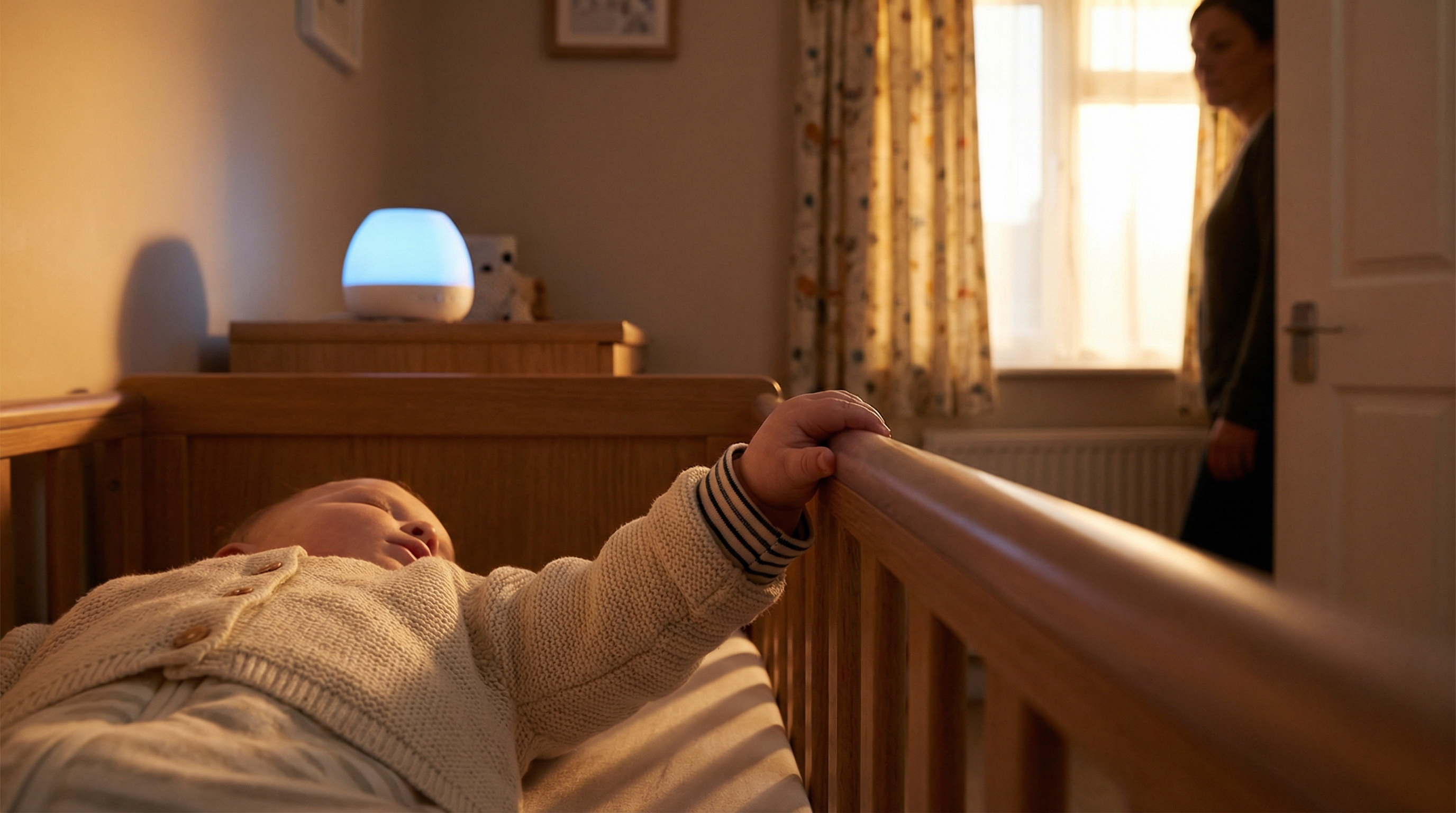


Few topics in parenting ignite as much fury as sleep training. Mention it in any online parenting group and you'll watch perfectly reasonable adults descend into ideological warfare within minutes. One camp insists you're damaging your baby's brain. The other says you're creating a rod for your own back by not doing it.
The truth? It's far more nuanced than either side admits. And when you strip away the emotion and actually look at what the research says, the picture is surprisingly clear.
This guide walks you through every major sleep training method, what the evidence actually shows, and how to decide what's right for your family. No judgement, no agenda - just the facts.
Why Sleep Training Is So Contested
Sleep training sits at the intersection of two deeply held beliefs: that babies need to learn independence, and that babies need constant responsiveness. Both positions contain truth, which is exactly why the debate gets so heated.
Much of the controversy stems from a misunderstanding of what sleep training actually is. Critics often assume it means leaving a baby to scream alone for hours. Advocates sometimes oversell it as a magic fix. Neither is accurate.
Sleep training is simply any structured approach to helping your baby learn to fall asleep independently. That's it. Some methods involve crying. Some don't. Some are quick. Some take weeks. They all share the same goal: teaching your baby that sleep is something they can do on their own.
The reason this matters isn't about convenience (though sleeping parents are better parents). It's about the fact that all humans - babies included - wake briefly between sleep cycles. The skill of falling back to sleep without help is genuinely useful for your baby's wellbeing.
The Major Sleep Training Methods Explained
Graduated Extinction (The Ferber Method)
Developed by Dr Richard Ferber at Boston Children's Hospital, this is probably the most well-known method. Despite its reputation, it's not about leaving your baby to cry indefinitely.
How it works: You put your baby down awake, leave the room, and return at gradually increasing intervals to briefly reassure them (without picking them up). Night one might be 3, 5, then 10-minute intervals. Night two starts at 5, 10, then 12 minutes. The intervals extend each night.
What to expect: Typically the hardest nights are nights one and two. Most babies show significant improvement by night three or four. The full process usually takes 3-7 days.
Best for: Babies who get more wound up when you're in the room. Families who want a structured, time-tested approach with clear guidelines.
Full Extinction (Cry It Out / CIO)
This is the method people usually mean when they say "cry it out," and it's the one that generates the most controversy.
How it works: After a consistent bedtime routine, you put your baby down awake and don't return until a predetermined time (usually morning, or a scheduled night feed). You ensure the environment is safe, then you step away.
What to expect: The first night can involve significant crying - sometimes 45 minutes to an hour or more. However, research consistently shows that total crying time over the course of sleep training is often less with full extinction than with graduated methods, because the inconsistency of check-ins can sometimes prolong the process.
Best for: Babies who escalate when parents check in. Parents who find the in-and-out of Ferber harder emotionally than committing fully.
The Chair Method (Sleep Lady Shuffle)
Developed by Kim West, this is a more gradual approach that keeps you physically present.
How it works: You sit in a chair next to the cot while your baby falls asleep. Every few nights, you move the chair further from the cot - eventually out of the room entirely. You can offer verbal reassurance but avoid picking baby up.
What to expect: This takes longer - typically 2-3 weeks. There may still be some crying, but your presence often reduces it. Progress can feel slow in the middle.
Best for: Parents who can't bear to leave the room. Babies who are comforted by parental presence. Families willing to invest more time for a gentler approach.
Fading (Bedtime Fading)
This method works with your baby's natural sleep drive rather than against it.
How it works: You temporarily push bedtime later to match when your baby naturally falls asleep easily, then gradually move it earlier (by 15 minutes every few days) until you reach your target bedtime.
What to expect: Less crying than extinction methods because you're working with your baby's circadian rhythm. However, the temporary later bedtime means a period of even less sleep for everyone. Takes 2-4 weeks.
Best for: Babies who fight bedtime but sleep well once asleep. Families who prefer a slow, low-drama approach.
Pick Up, Put Down (PUPD)
Popular in Tracy Hogg's "Baby Whisperer" approach.
How it works: When your baby cries, you pick them up and comfort them until they're calm (but not asleep), then put them back down. Repeat as many times as needed.
What to expect: This can be physically exhausting - you might pick your baby up 50+ times on the first night. Some babies find the repeated picking up and putting down stimulating rather than soothing, which can backfire.
Best for: Younger babies (under 6 months, as a gentle first attempt). Parents who want maximum responsiveness during the process.
The No-Cry Sleep Solution
Based on Elizabeth Pantley's work, this approach aims to eliminate crying entirely.
How it works: A collection of gentle techniques including establishing strong sleep associations, a consistent bedtime routine, gradual removal of sleep props (like feeding to sleep), and responding immediately to any crying.
What to expect: This is the slowest approach - expect 4-8 weeks minimum, sometimes longer. The "no cry" label is slightly misleading; your baby may still protest changes to routine, but you respond immediately.
Best for: Parents strongly opposed to any crying. Families with the patience for a very gradual process. Situations where there's no urgency.
What the Research Actually Says
Here's where it gets interesting, because the evidence is far more consistent than the online debates would suggest.
The landmark studies:
The 2016 Gradisar study, published in Pediatrics, randomly assigned 43 infants to graduated extinction, bedtime fading, or a control group. Both sleep training methods resulted in babies falling asleep faster, waking less often, and - crucially - showed no difference in cortisol levels (stress hormones) compared to the control group. A 12-month follow-up found no differences in parent-child attachment or child emotional and behavioural problems.
The 2012 Price study followed 326 children for five years after sleep training. At age six, there were no significant differences between sleep-trained and non-sleep-trained children on any measure of emotional health, behaviour, sleep quality, stress, child-parent relationship, or maternal mental health.
Hiscock's 2008 randomised controlled trial of 328 families found that behavioural sleep interventions improved infant sleep and maternal depression, with benefits persisting at two-year follow-up.
The consistent finding: Across multiple well-designed studies, sleep training methods that involve some crying have not been shown to cause harm to babies. Not to their cortisol levels, not to their attachment security, not to their emotional development, not to their long-term mental health.
What about the opposing evidence? Critics often cite studies on prolonged institutional neglect (Romanian orphanages, for example) to argue that crying causes brain damage. These studies involve extreme deprivation over months or years - they have essentially nothing in common with a few nights of sleep training in a loving home. Equating the two is scientifically unfounded.
When to Start Sleep Training
Most sleep experts and paediatricians recommend waiting until your baby is at least 4-6 months old before formal sleep training. Here's why:
- Before 4 months: Babies' circadian rhythms aren't fully developed. Night waking is biologically appropriate and necessary for feeding. Sleep patterns are highly irregular. Our newborn sleep schedule guide explains what to expect in those early weeks.
- 4-6 months: Most babies are developmentally capable of sleeping longer stretches. Their circadian rhythm is established. Many (though not all) no longer need night feeds for nutritional reasons.
- After 6 months: Generally the easiest window for sleep training. Babies are developmentally ready, and habits are becoming more entrenched - so earlier is often easier than later.
Talk to your GP or health visitor before starting. Some babies with reflux, feeding difficulties, or other medical conditions may need a different approach.
Want the complete guide?
Everything from pregnancy to age two. Evidence-based, dad-tested, no fluff.
Get The New Dad Playbook - £29Is CIO Harmful? Addressing the Biggest Fear
Let's address this head-on, because it's the question that keeps parents up at night (sometimes literally).
The claim: Cry it out damages your baby's brain, floods them with cortisol, disrupts attachment, and causes lasting psychological harm.
What the evidence shows: No well-designed study has demonstrated harm from sleep training methods, including full extinction. The Gradisar study specifically measured cortisol and found no elevation. The Price study tracked children for five years and found no negative outcomes. Multiple systematic reviews have reached the same conclusion.
The nuance: This doesn't mean your baby isn't upset when they cry. They are. Crying is their way of protesting a change they don't like. But being temporarily unhappy about a new routine is not the same as being harmed. Your baby also cries when you put them in a car seat or take away something dangerous. Temporary distress in the context of a loving, responsive relationship is not trauma.
The important caveat: Sleep training works best when it happens within an otherwise responsive parenting relationship. If you're attentive and responsive during the day, a few nights of crying while learning to sleep does not undo that secure attachment.
The Temperament Factor
One thing the sleep training books often downplay is how much your baby's temperament affects which method works.
Easy-going babies may respond to almost any method within a few days. Lucky you.
Spirited or persistent babies may cry longer and harder, regardless of method. These babies often do better with full extinction than graduated methods, because the check-ins give them something to escalate about.
Sensitive babies may respond better to gentler methods like the chair method or fading, where parental presence provides security during the transition.
Alert, curious babies may find your presence in the room stimulating rather than comforting. If your baby stares at you from the cot instead of sleeping, the chair method probably isn't your best bet.
There is no single best method. There's only the best method for your specific baby and your specific family.
Dad's Specific Role in Sleep Training
Here's something the research rarely highlights but experienced families know well: dads are often uniquely positioned to lead sleep training.
Why dads can be the secret weapon:
- No milk association. If your partner is breastfeeding, the baby associates them with feeding - and milk. When dad does bedtime, that association isn't there. Baby is more likely to accept comfort without expecting a feed.
- Different comfort style. Dads tend to be less anxious about crying (on average - no judgement if you're not), which means more consistent implementation. Consistency is the single biggest predictor of sleep training success.
- Gives mum a break. If your partner has been the primary sleep responder for months, she's exhausted. Taking over bedtime and night responses during sleep training is one of the most impactful things you can do.
Practical tips for dads leading sleep training:
- Do the bedtime routine yourself for at least a week before starting sleep training, so baby is used to you at bedtime.
- Agree on the plan with your partner beforehand. Mixed signals between parents is the number one reason sleep training fails.
- Be the one who goes in (if using Ferber) or stays in the room (if using the chair method). Your partner can wear earplugs or go for a walk.
- Keep a log. Track cry duration, wake times, and how long it takes baby to fall asleep. Seeing the numbers improve is motivating for both of you.
- Commit to at least a week. Three nights isn't enough data. Most methods need 5-7 days minimum.
How to Choose Your Method
Still not sure which approach to try? Ask yourself these questions:
How does your baby react when you're in the room? If they calm down, try the chair method. If they escalate, try Ferber or full extinction.
How much crying can you tolerate? Be honest. If you'll cave on night two, choose a gentler method. An abandoned attempt teaches your baby that crying hard enough will end the process - making the next attempt harder.
How urgent is the situation? If everyone is coping okay, gentle methods are fine. If someone is dangerously sleep-deprived (driving while exhausted, struggling with mental health), faster methods are medically justified.
What's your baby's age? Under 4 months: focus on good sleep habits, not formal training. 4-6 months: any method can work. Over 8-9 months: separation anxiety peaks, so quicker methods often cause less total distress than drawn-out ones.
Can you be consistent? Whichever method you choose, inconsistency is worse than any specific approach. Pick one, agree with your partner, and stick with it for at least a full week.
Frequently Asked Questions
Will sleep training damage my baby's attachment to me?
No. Multiple longitudinal studies, including the Price et al. five-year follow-up, have found no differences in attachment security between sleep-trained and non-sleep-trained children. Secure attachment is built through thousands of responsive interactions during waking hours - not undermined by a few nights of learning to sleep.
What if sleep training doesn't work after a week?
First, check that you're being completely consistent. The most common reason for failure is inadvertently reinforcing crying by sometimes responding and sometimes not. If you've been fully consistent for 7-10 days with no improvement, your baby may not be developmentally ready, there may be an underlying issue (reflux, ear infection, teething), or this particular method may not suit your baby's temperament. Try a different approach or consult your health visitor.
Can I still do night feeds during sleep training?
Yes. Sleep training and night weaning are separate things. You can sleep train while keeping one or two scheduled night feeds - just ensure you're going to baby at set times rather than in response to crying. Speak to your GP or health visitor about whether your baby still needs night feeds based on their age and weight.
Is it normal for crying to get worse before it gets better?
Yes - this is called an "extinction burst." On night two or three, your baby may cry harder and longer than night one. This is actually a sign the process is working. Your baby is testing whether the old rules still apply. If you stay consistent through the burst, improvement typically follows quickly.
My partner and I disagree about sleep training. What should we do?
This is incredibly common. The most important thing is that you're both on the same page before starting. Discuss what you've both read, acknowledge each other's concerns, and agree on a specific plan with a specific timeline. If one parent undermines the other's approach, it won't work - and it'll create relationship tension on top of sleep deprivation. Consider compromising on a moderate method (like Ferber) that balances responsiveness with structure.
Do I need to sleep train, or will my baby just figure it out eventually?
Many babies do eventually learn to sleep through the night without formal training - but "eventually" might mean age two or three for some children. Sleep training isn't mandatory. It's a tool available to families who need it. If your current situation is sustainable and everyone's coping, there's no obligation to change anything.