
Nobody warned you about this part. The birth classes covered labour. The books covered feeding schedules. But nobody sat you down and said: "By the way, having a baby is going to wreck your body too."
Not in the same way as your partner - of course not. But the sleep deprivation, the stress eating, the sedentary months of sitting on the sofa doing night feeds, the total collapse of any exercise routine you once had - all of that adds up. And then one day you catch yourself in the bathroom mirror and think: "Who is that?"
This article is for that version of you. It's honest about what happens to dads after a baby arrives, and it gives you a realistic path back to feeling like yourself - without requiring a gym membership, a personal trainer, or a 5am wake-up call.
Why Dads Let Themselves Go After Baby - and Why It Matters
First: you are not lazy. You are not weak. You are operating on broken sleep with elevated stress hormones, zero routine, and approximately no time to yourself. The weight gain and loss of fitness that so many new dads experience is not a character flaw - it's a predictable physiological response to the conditions you're living in.
Here's what's actually happening in your body:
- Sleep deprivation raises cortisol - your stress hormone. Chronically elevated cortisol promotes fat storage, particularly around the abdomen.
- Poor sleep disrupts ghrelin and leptin - the hormones that regulate hunger and fullness. You'll feel hungrier than you actually are, and you won't feel full when you should.
- You're eating for comfort and convenience - not because you want to, but because a cold takeaway at 11pm is what you can actually manage.
- Your exercise routine has been completely destroyed - the gym sessions, the runs, the five-a-side - all casualties of the new schedule.
Some studies suggest new dads gain an average of 4 to 6 kilograms in the first year. That's not a crisis - but it matters. Not because of how you look, but because how you feel physically affects everything else: your mood, your energy levels, your patience with the baby, and your relationship with your partner. If you've noticed yourself becoming snappier or more withdrawn since the baby arrived, it's worth reading our piece on new dad anxiety alongside this one.
The good news? You don't need to overhaul your life. You just need to start moving again - in whatever small way is currently available to you.
The Reality of Exercise with a Newborn
Let's be straight with each other. The first six to eight weeks are survival mode. If you're reading this while your baby is under six weeks old, the advice is simple: sleep when you can, eat reasonably, and go for a walk when the baby lets you. That's genuinely enough for now.
After that, things open up slightly. Not massively - but enough. Here's the reality of what exercise looks like with a baby in the house:
- Your sessions will be short, unpredictable, and frequently interrupted
- Nap windows are your main opportunity - and they're unreliable
- You'll start things and not finish them. That's fine.
- Consistency matters far more than intensity right now
- The goal is not transformation - it's maintenance and momentum
"A 15-minute workout you actually do is worth 1,000 times more than a 60-minute workout you planned to do."
Lower the bar. Seriously. The version of fitness that worked before the baby - the 45-minute gym sessions, the Saturday morning parkruns - will come back. But trying to force that version into a newborn schedule will just leave you feeling like a failure when it inevitably falls apart.
Getting Started: Three Levels for Where You Are Right Now
Here are three realistic entry points depending on how much time and energy you have on any given day.
The 5-Minute Option
For when you're running on two hours of sleep and the baby just went down.
- 10 press-ups
- 10 squats
- 10 lunges (each leg)
- 30-second plank
- Repeat once if you have the energy
That's it. Done. You moved today.
The 15-Minute Option
For when you've had a reasonable night and the baby is napping reliably.
- 3 rounds of: 15 squats, 10 press-ups, 10 reverse lunges, 20 mountain climbers
- Finish with a 60-second plank hold
- No equipment needed. Living room floor works perfectly.
The 30-Minute Option
For a good day - partner is home, baby is settled, and you have a proper window.
- A 25-minute run (or brisk walk/run if you're restarting from scratch)
- Or: a full bodyweight circuit - 5 rounds of the Level 2 routine
- Or: take the baby in the pram and walk for 30 minutes at pace
The 30-minute option doesn't happen every day. When it does, treat it as a bonus - not a baseline.
Want the complete guide?
Everything from pregnancy to age two. Evidence-based, dad-tested, no fluff.
Get The New Dad Playbook - £29Exercises You Can Do With the Baby
Some of the best postnatal fitness for dads involves the baby directly. It's not just practical - it's good for bonding, and honestly, babies seem to enjoy the movement.
Pram Runs
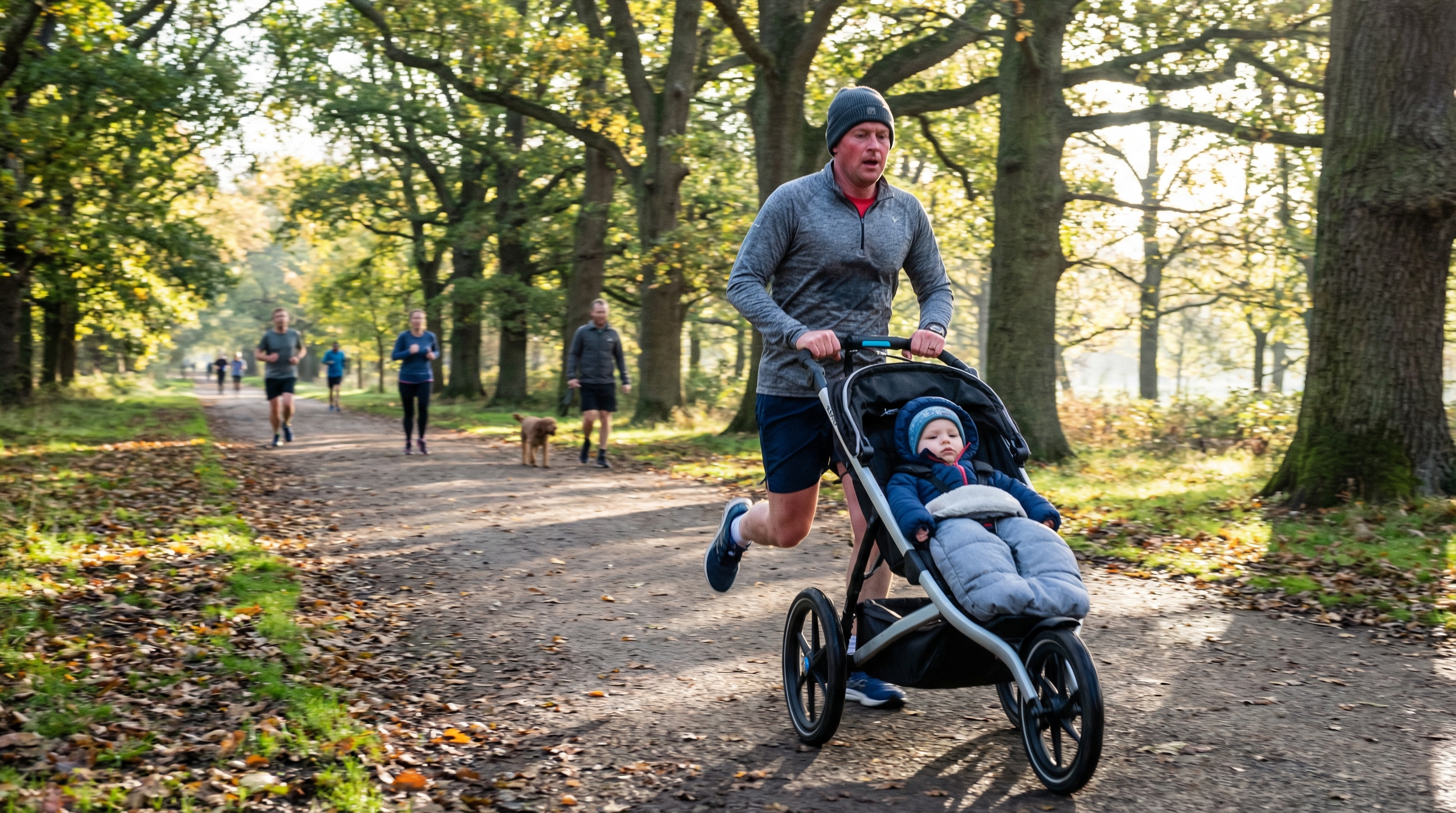
A running pram (sometimes called a jogging pram) is a solid investment if running is your thing. Most manufacturers recommend waiting until around six months when your baby has enough neck control to handle the movement. Once you're there, a pram run is a genuinely effective workout - the extra resistance from pushing makes it harder than a standard run.
Carrier Walks
Even a good carrier walk at a decent pace gets the heart rate up and strengthens your back and legs. Newborns often sleep brilliantly in carriers, which means this doubles as a calming strategy when nothing else is working. A 45-minute carry walk burns more than most people expect.
Floor Play Exercises
During tummy time (which your baby needs from day one), you can do press-ups, planks, and sit-ups next to them. It entertains the baby, gets your workout in, and you look like a brilliant dad who's also doing press-ups. Win all round.
- Baby squats: Hold your baby safely against your chest, facing outward. Do slow, controlled squats. Babies love the movement - many find it soothing.
- Baby overhead press: Only when neck control is well established (typically 4+ months). Hold baby securely, lift overhead gently. This is more of a laugh than a workout, but every little helps.
- Press-up peek-a-boo: Do a press-up, come down to the baby's level at the bottom, pull a face. Repeat until either of you gets bored.
Nutrition Basics When You're Sleep-Deprived
Here's the honest truth about nutrition in the newborn phase: aggressive dieting is a terrible idea. Your body is under stress. It needs fuel. The goal right now is not to cut calories aggressively - it's to make slightly better choices than the alternative.
A few things that actually help:
- Protein at every meal. Protein keeps you full, preserves muscle mass, and helps with the hunger hormone disruption that sleep deprivation causes. Eggs, Greek yoghurt, chicken, protein shakes - easy options that don't require cooking.
- Prep snacks in advance. When you're exhausted and starving at midnight, you will eat whatever is within reach. Make sure that thing is not a family-size bag of crisps. Keep nuts, fruit, cheese, and protein bars accessible.
- Hydrate properly. Sleep-deprived people often mistake thirst for hunger. Keep a water bottle next to wherever you sit with the baby.
- Don't skip breakfast. It sounds obvious, but chaotic mornings mean breakfast gets skipped constantly. Even a banana and some yoghurt is vastly better than nothing.
- Takeaways are fine occasionally. Don't beat yourself up over them. Just try not to make them every night.
The Mental Health Benefits of Moving
This might actually be the most important section. Postnatal fitness for dads isn't just about how you look - it's about how you function.
Exercise is one of the most effective interventions available for anxiety and low mood. It raises serotonin and dopamine, reduces cortisol, and gives you something that is genuinely yours - a break from the relentless demand of new parenthood, a moment where you're just a person moving their body through space.
The identity shift that comes with becoming a dad is significant and often underestimated. If you're struggling with who you are now versus who you were before the baby, this piece on the identity crisis of new fatherhood is worth a read. Physical activity is one of the most reliable ways to feel more like yourself again during that transition.
Even a 20-minute walk changes your mood. This is not motivational poster stuff - it's brain chemistry. When you're deep in a bad week and everything feels hard, moving your body is one of the few interventions genuinely available to you.
Realistic 4-Week Re-Entry Plan
This plan assumes you're starting from a standing start - little to no exercise in the weeks since the baby arrived. It's intentionally modest. The goal is to build the habit, not transform your body in a month.
| Week | Target | What It Looks Like |
|---|---|---|
| Week 1 | Move every day | 3 x Level 1 sessions + 4 x 20-min walks (with pram counts) |
| Week 2 | Build to 15 minutes | 3 x Level 2 sessions + 4 x walks. Notice how you feel. |
| Week 3 | Add one longer session | 2 x Level 2, 1 x Level 3 (run or longer walk), 3 x walks |
| Week 4 | Consolidate | 3 x Level 2/3, daily walking, introduce one thing you actually enjoy |
After week four, you'll have a baseline. You'll know which sessions actually happen and which don't. Build from there.
A few final things worth saying:
- Compare yourself to last week, not to who you were before the baby
- Tell your partner what you're doing - their support makes it vastly more achievable
- Missing a day or a week doesn't mean you've failed - it means you have a baby
- Progress will come. It's just slower than it used to be, and that's fine
You're not training for a competition. You're training to feel like yourself again. That's more than enough of a reason.
Frequently Asked Questions
When can dads start exercising after their baby is born?
There's no medical restriction on dads exercising after birth - unlike new mums, your body hasn't gone through the physical trauma of labour. That said, the first few weeks are chaotic, and it makes sense to wait until you've found a basic routine with your baby before adding exercise into the mix. Most dads find weeks 4 to 6 is a realistic starting point, even if it's just short walks.
What is the best exercise for new dads?
The best exercise for new dads is whatever you'll actually do. Walking is genuinely underrated - a 20-minute pram walk burns calories, clears your head, and often gets the baby to sleep. Bodyweight training at home requires no equipment and fits into nap windows. If you had a gym habit before, a single session a week is enough to maintain momentum until your schedule opens up.
How do I lose weight as a new dad when I'm exhausted all the time?
Start with nutrition rather than exercise. When you're sleep-deprived, hunger hormones go haywire - you'll crave sugar and carbs. Focus on protein at every meal, keep easy healthy snacks available, and try to avoid eating out of exhaustion late at night. Even modest exercise helps regulate these hormones. Don't try to diet aggressively while sleep-deprived - your body needs fuel to cope.
Can I exercise with my baby?
Yes - and it can be a great bonding experience too. Pram runs, carrier walks, and floor-based exercises during tummy time all work well. Baby squats (holding your baby safely against your chest) and press-ups while they lie on the mat next to you are popular options. Always ensure your baby is supported safely and avoid any bouncing or impact exercises with newborns under 6 months.
Why do so many new dads gain weight?
New dads gain weight for a predictable set of reasons: chronic sleep deprivation raises cortisol and ghrelin (hunger hormone), there's no time or energy to exercise, stress leads to comfort eating, and meals become quick and convenient rather than nutritious. It's extremely common - some studies suggest dads gain an average of 4 to 6kg in the first year after a baby arrives.