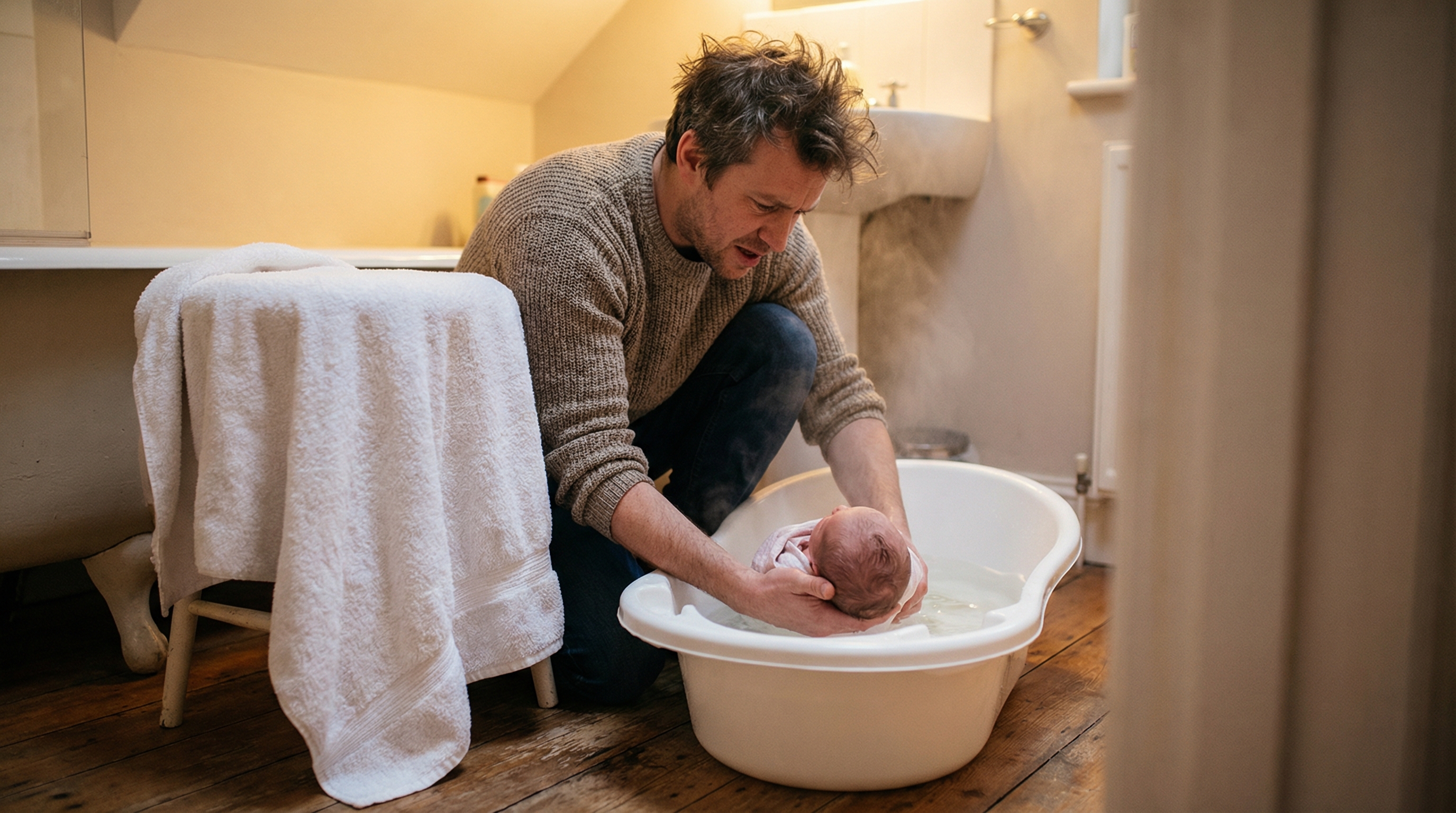


You've changed nappies. You've figured out the holding thing. And now someone - probably your partner, possibly a midwife - has casually suggested you give the baby a bath.
And you're standing there thinking: I'm supposed to put this tiny, slippery, screaming human into water?
Yeah. It's terrifying the first time. Every dad says it. But here's the thing - newborns are tougher than they look, baths don't need to be complicated, and you're going to be absolutely fine.
This is your calm, step-by-step guide. No judgement. No jargon. Just exactly what to do, what not to do, and how to get through it without either of you crying (no promises on the baby though).
How Often Do Newborns Actually Need a Bath?
Let's start with the good news: not very often.
Two to three times a week is plenty. Newborns don't get sweaty or dirty the way older kids do. In fact, bathing them too often can strip the natural oils from their skin and cause dryness or irritation - especially in the first few weeks when their skin is still adjusting to life outside the womb.
Between baths, you can do what's called a top and tail - which is essentially just cleaning the important bits (face, neck folds, hands, nappy area) with cotton wool and warm water. No bath required. Takes about five minutes. Job done.
So if your baby had a bath yesterday and they're not covered in something unspeakable, you can skip today. Nobody's judging.
Top and Tail vs Full Bath - What's the Difference?
Top and tail is the daily maintenance clean. You don't need a bath for this - just a bowl of warm water, some cotton wool, and a towel. Clean their face (eyes, ears, neck folds), their hands, and then their nappy area. Top to bottom, front to back. Fresh cotton wool for each area.
A full bath is the proper immersion in water. This is what we're going to walk through step by step below. You'll do this two or three times a week once your baby is ready for it.
The key question is: has the umbilical cord stump fallen off yet?
The Umbilical Cord Stump - When Can You Give a Full Bath?
Until the cord stump falls off - which usually happens somewhere between one and three weeks after birth - you should stick to sponge baths or top and tail only. Don't submerge the stump in water.
Keep the stump area clean and dry. If it gets a bit mucky, just wipe around it gently with damp cotton wool and pat it dry. It'll go a bit crusty, maybe change colour. That's all normal. It'll fall off on its own.
Once it's gone and the area has healed (no redness, no weeping), you're clear for full baths.
If you notice any redness, swelling, or a bad smell around the stump, have a word with your midwife or health visitor. It's probably nothing, but it's worth checking.
Before You Start: Get Everything Ready
This is the most important part, and it's the bit most people rush. Do not undress the baby until everything is ready and within arm's reach. Once that baby is naked and wet, you are not leaving to grab something from the other room. Ever.
Here's your checklist:
- Baby bath, washing-up bowl, or bath support - you don't need anything fancy. A clean washing-up bowl works perfectly well for the first few weeks.
- Warm water - fill to about 8–10cm deep. Test the temperature with your elbow (not your hand - your hands are used to hotter water). It should feel comfortably warm, not hot. If you've got a bath thermometer, you're aiming for 37–38°C.
- Two soft towels - one to lay out for afterwards, one spare.
- Cotton wool - for cleaning the face. No wipes on newborn faces.
- Clean nappy and fresh clothes - laid out and ready to go.
- Moisturiser (optional) - if your baby has dry skin, something like Aveeno Baby or Oilatum Junior works well. Ask your health visitor if you're not sure.
That's it. No rubber ducks required (yet).
Want the complete guide?
Everything from pregnancy to age two. Evidence-based, dad-tested, no fluff.
Get The New Dad Playbook - £29Step-by-Step: How to Bathe a Newborn
Right. Everything's ready. Baby's awake (don't wake a sleeping baby for a bath - that's just asking for trouble). Let's do this.
Step 1: Undress Baby and Wrap in a Towel
Take their clothes off and wrap them in a towel to keep them warm. You're going to wash one bit at a time, so only expose the part you're currently cleaning.
If your baby hates being undressed (many do), talk to them calmly. Your voice is the most reassuring thing in their world right now.
Step 2: Clean the Face First
Before you go anywhere near the water, clean their face with damp cotton wool. No soap.
- Eyes: Wipe gently from the inner corner to the outer corner. Use a fresh piece of cotton wool for each eye.
- Ears: Clean around (never inside) the ears.
- Neck folds: Get into those creases. Milk collects in there and goes a bit cheesy. It's grim but normal.
Step 3: Lower Into the Water - Feet First
This is the scary bit, and it's actually fine once you've done it once.
Support the baby's head and neck with one hand - your wrist under their neck, your hand gripping the far arm. This gives you a secure hold and leaves your other hand free.
Lower them into the water feet first, slowly. The gradual entry helps them adjust to the temperature and reduces the shock factor.
Keep their head above water at all times. Your supporting hand doesn't move.
Step 4: Wash the Body
Using your free hand, gently splash warm water over their body. Clean the skin folds - armpits, behind the knees, between fingers and toes, in the groin creases. These are the spots where milk, sweat, and general newborn gunk collects.
You don't need soap every time. Plain water is fine for the first few weeks. If you do use a wash product, choose something fragrance-free and designed for newborns - your health visitor can recommend one.
Step 5: Wash Hair Last - The Football Hold
Hair goes last because it's where they lose the most heat.
You've got two options here:
- Tilt them back slightly in the water and splash water over their head with your free hand.
- Use the football hold - lift them out of the water and lay them along your forearm, face up, with their head over the bath. Splash water over their scalp and gently massage with your fingertips.
The football hold is the same one you might have used for general holding - baby lies along your forearm with their head resting in your hand. It gives you great control and keeps their face well clear of the water.
No shampoo needed for newborns. Their hair (if they have any) doesn't need it yet.
Step 6: Lift Out and Dry Immediately
Once you're done - and the whole thing should only take about five to ten minutes - lift baby out. Support their head with one hand, their bottom with the other.
Lay them on the dry towel you prepared earlier and wrap them up straight away. Newborns lose heat fast, especially when wet.
Pat dry - don't rub. Pay special attention to all the skin folds: neck, armpits, behind the ears, groin creases, between the toes. Any moisture left in folds can cause irritation.
Get the nappy on fast. Babies have a well-documented habit of weeing the moment the nappy comes off, and post-bath is prime time.
Why Does My Baby Cry During Baths?
Short answer: it's normal and it usually passes.
Most newborns cry during their first few baths. It's not because you're doing something wrong - it's usually because:
- The temperature change feels shocking (even if the water is perfect)
- Being naked feels insecure - they've spent nine months in a snug space
- They're just not used to it yet
A few things that can help:
- Keep a warm, damp flannel draped over their tummy while they're in the water - it helps them feel more secure
- Talk to them throughout - your voice is genuinely calming
- Keep baths short (5 minutes is fine)
- Make sure the room is warm enough - around 22–24°C is ideal
Most babies start to enjoy baths by about six to eight weeks. Some take longer. A few never love them. All of that is normal.
After the Bath: The Finishing Touches
Once baby is dry and wrapped up:
- Moisturise if needed - if their skin is dry or peeling (common in the first couple of weeks), apply a thin layer of something gentle. Aveeno Baby Daily Moisturising Lotion or Oilatum Junior Bath Additive are both widely available in the UK and recommended by health visitors.
- Fresh nappy, fresh clothes - sorted.
- Enjoy the smell - clean newborn is genuinely one of the best smells on earth. Bottle it if you could.
That's it. You've bathed a newborn. The first time is the hardest. By the third or fourth time, you'll barely think about it.
A Quick Note on Safety
This should go without saying, but it needs saying:
- Never leave a baby unattended in or near water. Not for a second. Not to grab a towel. Not to answer the phone. Not ever.
- If you need to leave the room for any reason, take the baby with you - wrapped in a towel is fine.
- Don't overfill the bath. 8–10cm of water is plenty.
- Always test the temperature before baby goes in.
You've Got This
Look, bathing a newborn feels terrifying the first time. The combination of a tiny, slippery baby and water triggers every protective instinct you've got. That's a good thing - it means you care.
But you'll get the hang of it quickly. Within a week or two, bath time will become one of the most enjoyable parts of your routine together. There's something about a clean, warm, sleepy baby that makes all the chaos worth it.
And if you're looking for more practical, no-nonsense guidance on surviving (and actually enjoying) the early days, The New Dad Playbook covers everything from holding your baby to changing nappies to figuring out what you actually need - all written by a dad who's been exactly where you are now.
Frequently Asked Questions
How often should I bathe a newborn?
Two to three times a week is plenty. Newborns don't get particularly dirty, and bathing too often can dry out their delicate skin. Between baths, a quick top and tail - cleaning the face, neck folds, hands, and nappy area with cotton wool and warm water - is all you need.
What temperature should a newborn bath be?
Aim for 37–38°C, which is roughly body temperature. The easiest way to test it is with your elbow - the water should feel comfortably warm, not hot. If you prefer precision, a bath thermometer costs a few pounds and takes the guesswork out of it.
Can I bathe a newborn with an umbilical cord stump?
Not a full bath - stick to sponge baths or top and tail until the cord stump falls off naturally, which usually happens between one and three weeks after birth. Keep the stump area clean and dry. Once it's fallen off and the skin has healed, you're good to go with full baths.
Why does my baby cry during baths?
This is very common, especially in the first few weeks. Babies often cry because of the temperature change, the sensation of being naked and unsupported, or simply because it's all new. Try keeping a warm flannel draped over their tummy in the water, keeping the room warm (22–24°C), and talking calmly throughout. Most babies start enjoying baths by around six to eight weeks.
When can I use baby bath products?
For the first four to six weeks, plain water is recommended by most UK health visitors. After that, you can introduce a gentle, fragrance-free baby wash if you'd like - but it's not essential. Avoid adult products, bubble bath, and anything heavily scented. If your baby has eczema or very sensitive skin, stick with water or ask your health visitor for specific product recommendations.